

TL;DR
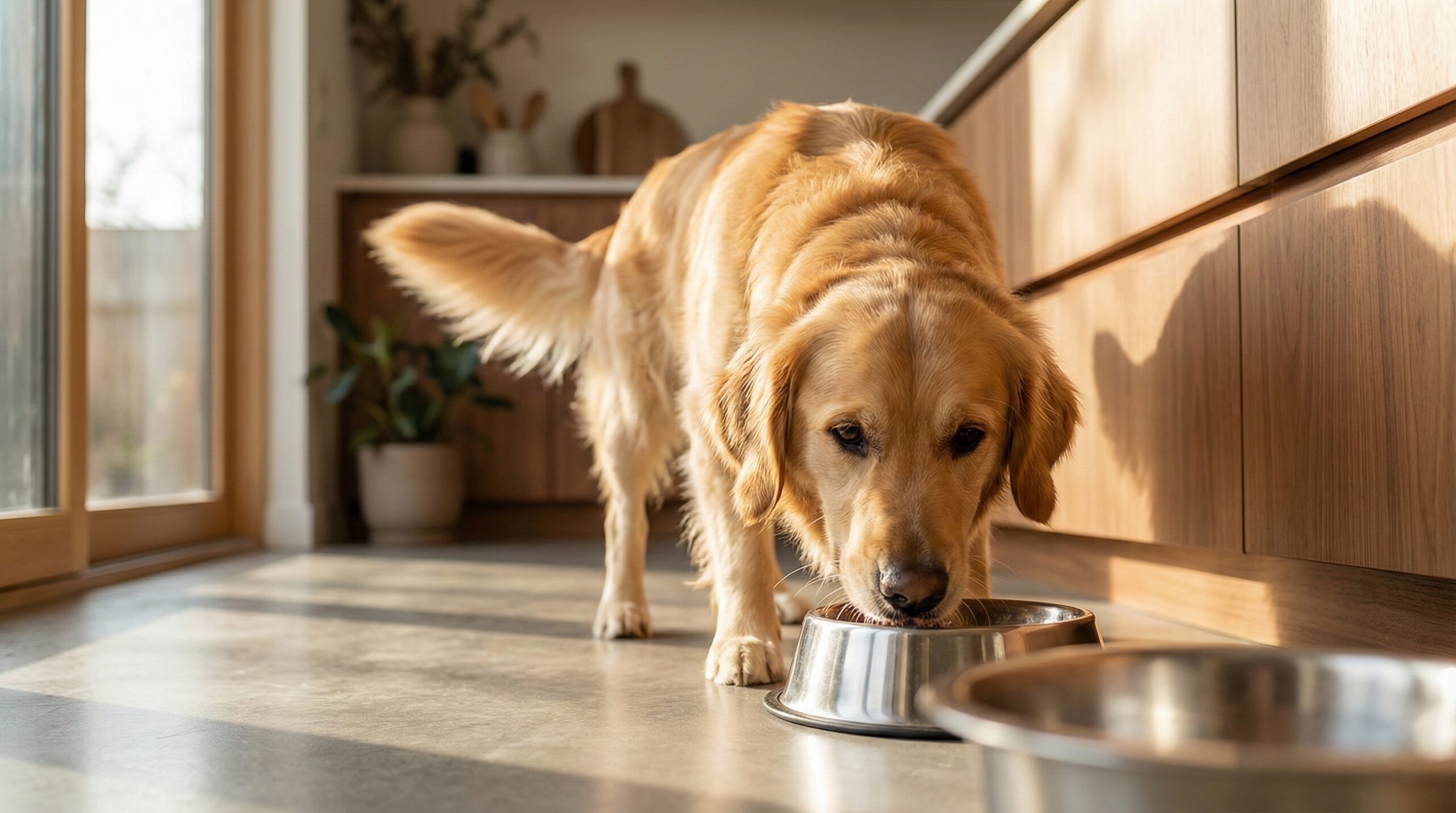
An elevated bowl can help some sensitive-stomach dogs eat more comfortably and with less frantic “chasing the bowl,” which may reduce gulping and post-meal regurgitation. The key is picking a stable setup and setting the height so your dog’s neck stays neutral — not craned upward. If vomiting is frequent or comes with weight loss, blood, lethargy, or dehydration, loop in your vet; a feeder is supportive gear, not a diagnosis.
Top Recommended Dog Elevated Bowls
| Product | Best For | Price | Pros/Cons | Visit |
|---|---|---|---|---|
| Fluff Trough Elevated Slow Feeder Dog Bowls Puzzle Cat Bowl | Fast eaters who regurgitate | $50 – $75 | Elevated trough + slow-feeder pacing; some kibble can lodge in the grid | Visit Amazon |
| Neater Pet Brands Neater Feeder Deluxe for Medium Dogs | Mess control for medium dogs | $50 – $75 | Contained feeder helps keep spills localized; fixed height may not fit every dog’s posture | Visit Amazon |
| X-ZONE PET Adjustable Elevated Dog Bowls Stand 4-4.5 in | Small dogs needing a low lift | $20 – $40 | Low adjustable height range for little breeds; limited owner feedback and specs in our dataset | Visit Amazon |
Top Pick: Best Overall Dog Elevated Bowls
Fluff Trough Elevated Slow Feeder Dog Bowls Puzzle Cat Bowl
Best for: Dogs that tend to regurgitate right after meals because they gulp — especially in multi-dog homes where competition makes eating speedier.
The Good
- Combines elevation with a slow-feeder pattern, which can help pace fast eaters (a common trigger for post-meal regurgitation).
- Trough-style eating area can be easier for flat-faced dogs than a deep, narrow bowl.
- Owner feedback highlights that it’s straightforward to clean compared with some puzzle bowls.
- Works as a “stay-put” feeding station for dogs that get more frantic when bowls slide around.
The Bad
- Some owners report kibble getting stuck in the deeper parts of the grid, so a dog may not be able to finish every piece.
- Food can be pushed up and over the back edge for some eaters, which may mean extra sweeping.
- If you set it too high for your dog, it can encourage an awkward, head-up posture (so height choice matters).
4.7/5 across 691 Amazon reviews
“So, this is a very unique design that I can tell is amazing for flat-faced dogs. I just adopted an elderly English bulldog, and she was having trouble breathing while eating out of regular raised bowls. This trough style is clearly what she needs! However, the slow feeder version didn’t work for us. The kibble gets stuck in the deep grid, and she can’t get…” — Verified Amazon buyer (5 stars)
“I have 2 of these for my Frenchies. They are the perfect height & very easy to clean. I just wish the back was a bit taller. My boy manages to push his food up over the back of the dish onto the floor. That’s the only downside to it. My girl is smaller & she doesn’t have this issue. If it were a couple of inches taller the food would stay in the dish no…” — Verified Amazon buyer (4 stars)
Typical price: $50 – $75
“We use Fluff Trough with slow feeder insert. It’s designed for flat-faces. Our dogs do well with them.” — r/BostonTerrier discussion
Our Take: If your “sensitive stomach” issue is mostly speed-related regurgitation and messy, frantic eating, this is the most directly targeted option in our lineup — just watch for kibble stuck in the grid and keep the height low enough for a relaxed neck.
Neater Pet Brands Neater Feeder Deluxe for Medium Dogs
Best for: Medium dogs (around the stated size range) who splash water, scatter kibble, or get stressed by a messy feeding area — which can make nausea-prone dogs feel worse.
The Good
- Raised feeding position can be more comfortable for some dogs, especially if bending down seems to trigger coughing, gagging, or “gulping air.”
- Contained design helps keep food and water in one place, reducing floor mess and the “moving target” problem.
- Owner feedback points to better day-to-day livability (less kicking bowls, easier cleanup).
- A solid, defined feeding station can help households that need predictable routines for GI-sensitive dogs.
The Bad
- Height is fixed, so it may not keep every dog’s neck in a neutral line (especially if your dog is between sizes).
- It’s a feeder system rather than a minimalist stand, so it takes up more floor space.
4.7/5 across 8,470 Amazon reviews
“This feeder is amazing for keeping the area clean from food spills and water! The elevated design is perfect for medium dogs, and the no-spill setup really works — no more messy floors. Super sturdy and easy to clean too. Definitely recommend if you want a cleaner, more organized feeding area for your pup!” — Verified Amazon buyer (5 stars)
“This Neater Feeder Deluxe felt like a step up from ordinary bowls. The elevated design puts food and water at a comfortable height for medium dogs (~40 lbs), which seemed to help reduce neck strain and messy scooping. The bronze finish looks nice and the whole unit feels good quality. Sturdy plastic, solid construction, and the bowls sit in the frame…” — Verified Amazon buyer (4 stars)
Typical price: $50 – $75
“It keeps their food and water in one place, and it’s big enough that we see it–we don’t kick it.” — verified buyer, 5 stars
Our Take: For sensitive-stomach dogs who do best with a calm, consistent setup (and for owners tired of constant spills), this is a practical pick — just confirm the fixed height doesn’t make your dog lift their head to eat.
X-ZONE PET Adjustable Elevated Dog Bowls Stand 4-4.5 in
Best for: Small dogs who only need a slight lift (think toy breeds or small seniors) where a big raised feeder would force an uncomfortable reach.
The Good
- Low height range can be a better match for little dogs than taller “one-size” elevated stands.
- Adjustability gives you at least some ability to dial in posture rather than guessing a fixed height.
- Can be a simple way to keep bowls from sliding as much, which matters for dogs that gulp when the bowl moves.
The Bad
- We have limited owner-review detail and product-spec detail in the provided data, so we’re less confident about long-term stability and ease of cleaning than the top two picks.
- The height range is narrow, so it won’t suit medium/large dogs or growing puppies for long.
- As with any stand, if it wobbles on your floor surface, it can backfire by making eating more frantic.
4.5/5 across 6,088 Amazon reviews
“The media could not be loaded. Update: Still holding up strong and the perfect size for my 29 lb ALD pup. Added a video of my pup’s progress of "wiping his face" after drinking water. Now the hard part, getting him to do this without prompting! I learned this how-to from videos on YT.I was actually surprised how nice and sturdy this is. I had no problem…” — Verified Amazon buyer (5 stars)
“Three stars for being super overpriced. This is not worth $45 – but I suppose something is worth what you are willing to pay for it, so it was apparently worth it to me. It is cute, easy to put together and work great for my two dogs.” — Verified Amazon buyer (3 stars)
Typical price: $20 – $30
Our Take: It’s a reasonable “low lift” option for small dogs with mild posture needs — but because the available owner feedback is thin here, we’d be picky about return policy and do a careful wobble/slip test on your floor.
FAQ
Do elevated bowls help dogs with sensitive stomachs?
They can help some dogs, mainly by improving eating posture and reducing frantic gulping caused by bowls sliding around. But they don’t treat underlying GI disease — if your dog has ongoing vomiting, weight loss, blood, lethargy, or dehydration, it’s time to call your vet (WSAVA client-education resources are a good baseline for understanding vomiting vs regurgitation and when to seek care).
What height should an elevated bowl be for sensitive stomach issues?
Aim for a neutral neck position: your dog shouldn’t have to noticeably lift their head up or stretch forward to reach the food. A practical “fit check” is to watch a few meals and lower the bowl if the head is held high; raise it slightly if your dog is hunching down and looking uncomfortable.
Regurgitation vs vomiting: what’s the difference and why does it matter?
Regurgitation typically happens quickly after eating and tends to look effortless (food comes back up without much abdominal heaving). Vomiting more often involves retching and can happen later; it’s more likely to be tied to illness that needs medical attention. If you’re unsure which you’re seeing, take a short video for your vet — it can help speed up next steps.
Are elevated bowls safe for fast eaters?
They can be, but stability matters. If the stand skids, the dog may eat even faster and swallow more air. For heavy gulpers, pairing a stable feeder with a slow-feeder design (or serving smaller, more frequent meals) is often more helpful than height alone.
Are elevated bowls linked to bloat (GDV) in large dogs?
Risk factors for GDV are complex, and if you have a large, deep-chested breed you should discuss feeding setup with your vet. For background, the American College of Veterinary Surgeons (ACVS) GDV overview is a solid starting point on what bloat is and why it’s an emergency.
What bowl material is best for nausea-prone dogs?
Stainless steel is typically easiest to sanitize and least likely to hold odors or biofilm compared with many plastics. Regardless of material, wash bowls daily, and if your bowls are dishwasher-safe, use the dishwasher regularly for a deeper clean.
When should I call the vet instead of changing bowls?
Call your vet promptly if vomiting is persistent, worsening, or accompanied by blood, weight loss, lethargy, dehydration, severe diarrhea, or pain. For broader pet health and safety updates, you can also review guidance from the FDA Center for Veterinary Medicine (CVM), but it shouldn’t replace veterinary care for an actively sick dog.
Bottom Line
For most sensitive-stomach situations tied to fast eating and post-meal regurgitation, we’d start with the Fluff Trough because it combines elevation with slow-feeder pacing in one stable setup. Whatever you choose, set the bowl height so your dog can eat with a relaxed, neutral neck and keep bowls cleaned daily to limit odor and buildup. If GI signs persist or look severe, get your vet involved — feeders can support comfort, but they can’t diagnose (or fix) chronic stomach problems.
Affiliate disclosure: Some of the links in this article are affiliate links, meaning we earn a small commission if you make a purchase.