

TL;DR
Living with a dog when you or your pet suffer from allergies requires more than just a standard brush; it requires a strategy. In 2026, the best approach involves two goals: protecting the dog’s skin barrier and capturing dander before it enters your lungs. After analyzing professional grooming standards and real-world feedback from Reddit, the standout performers are silicone-based tools for skin health and vacuum-assisted kits for human relief. Avoid harsh de-shedding blades if your dog has active irritation, and always prioritize tools that can be easily sanitized.
When you are navigating the massive world of dog products, it is easy to get overwhelmed by marketing fluff. This guide cuts through the noise to help you find tools that actually work for sensitive households.
| Product Name | Best For | Price Range | Pros/Cons | Visit |
|---|---|---|---|---|
| King Komb Deshedding Tool | Sensitive skin & short hair | $20 – $30 | Gentle rubber / Small blade side | |
| Dyson Groom Tool | Human dander allergies | $50 – $70 | Instant suction / Requires Dyson vacuum | |
| Flying Pig High Velocity Dryer | Removing loose undercoat | $150 – $200 | Deep cleaning / Very loud | |
| Earthbath Oatmeal & Aloe Shampoo | Itchy, inflamed skin | $15 – $20 | pH balanced / Not for yeast infections |
The Dual Approach: Dog Skin Sensitivity vs. Human Dander Allergies
When you start looking for grooming tools, you need to identify your primary “enemy.” Are you trying to stop your dog from itching, or are you trying to stop yourself from sneezing? These are two distinct problems that require different tools.
Dogs with skin allergies often have a compromised skin barrier. Every time you use a harsh metal brush, you risk creating microscopic tears in their skin. This allows environmental allergens like pollen or mold to penetrate deeper, making the itching worse. For these pets, your goal is “minimal friction.” You want to remove loose hair without scraping the skin.
On the flip side, if you are the one with allergies, your enemy is dander (dead skin cells) and saliva proteins dried on the dog’s coat. Traditional brushing actually makes this worse by launching these particles into the air. If this sounds like your household, your tool kit needs to focus on “containment.” You need tools that trap or blow away dander in a controlled environment so it doesn’t end up on your sofa or in your carpet.
Top Grooming Tools for Dogs with Sensitive, Allergy-Prone Skin
King Komb Deshedding Tool
If your dog has fine hair or skin that turns red at the slightest touch, the King Komb is widely considered the safest bet. Unlike traditional rakes that use sharp metal tines, this tool features a multi-edged rubberized side that mimics a massage while effectively grabbing loose hair. It’s particularly effective for short-haired breeds like Dachshunds or Labs who are prone to seasonal skin irritation.
The Good
- The rubber bristles don’t scratch the skin, even if you apply moderate pressure.
- It’s incredibly easy to clean; you just retractable the blades (if using that side) and wipe the hair off.
- Ergonomic design fits in the palm of your hand, giving you better control over sensitive areas like the belly.
The Bad
- The tool does have a retractable metal blade side; for dogs with active rashes or hot spots, you should avoid using this side entirely.
- It is less effective on very thick, double-coated breeds like Huskies compared to specialized undercoat rakes.
Our Take: Best for short to medium-haired dogs who need a gentle touch. Skip if your dog has a massive, thick double coat that requires deep “plucking.”
Earthbath Oatmeal & Aloe Shampoo
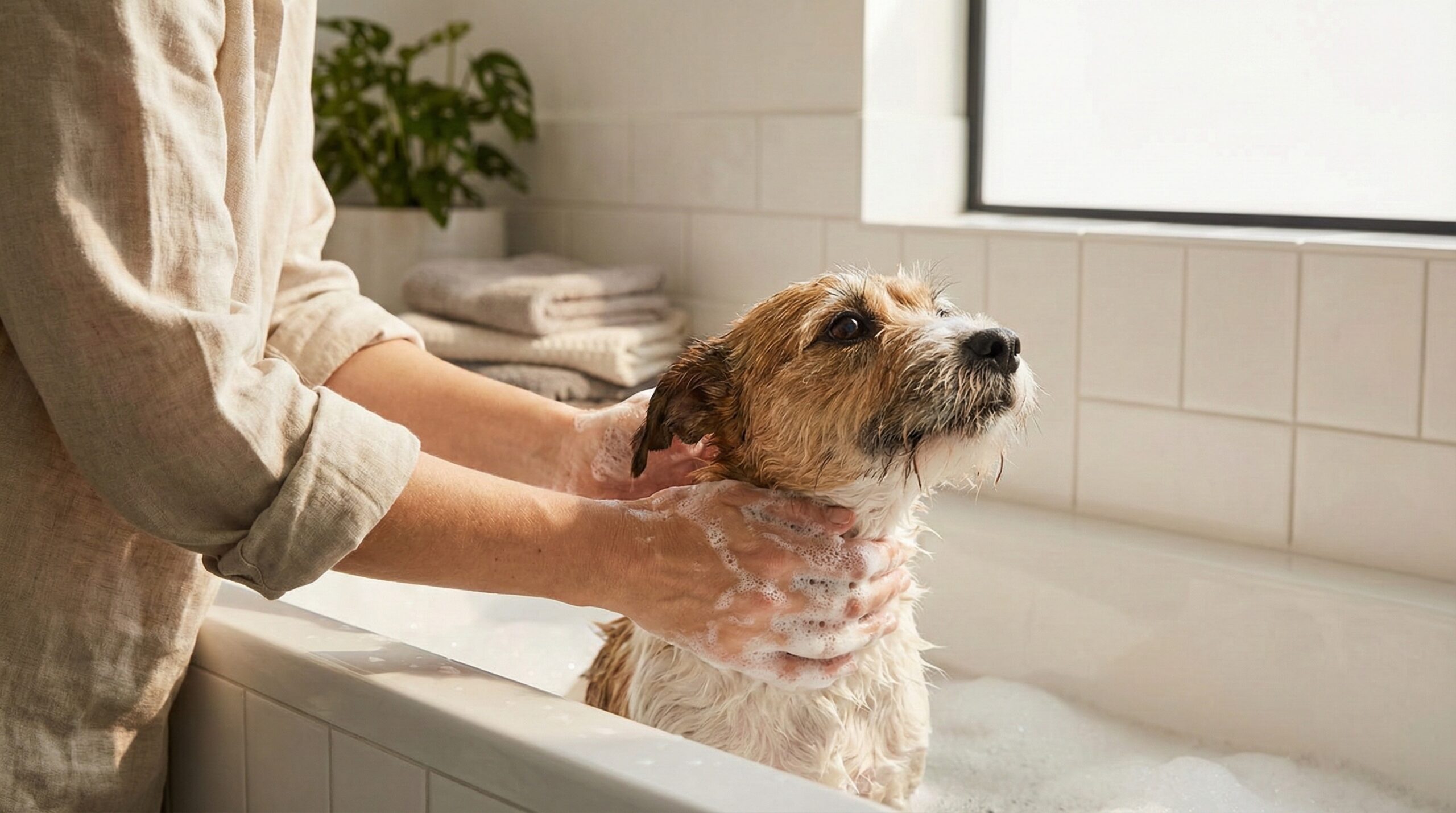
Grooming isn’t just about brushing; it’s about the “wash and prep” stage. Dogs with allergies benefit significantly from regular bathing to wash away environmental triggers like grass pollen. However, frequent washing can strip natural oils. Earthbath uses a soap-free, pH-balanced formula that focuses on soothing the skin rather than just cleaning the coat.
The Good
- Gentle enough for weekly use if your dog spends a lot of time outside in high-pollen areas.
- Contains no parabens or sulfates, which are common triggers for canine contact dermatitis.
- Actually helps neutralize the “doggy smell” without using heavy, irritating perfumes.
The Bad
- If your dog has a yeast infection (usually identified by a “corn chip” smell), oatmeal shampoos can actually feed the yeast and make the problem worse.
- The consistency is a bit thin, so you might find yourself using more product than expected.
Our Take: Best for dogs with dry, itchy skin caused by seasonal allergies. Skip if your dog has a greasy, yeasty odor—you’ll need a medicated antifungal wash instead.
Essential Tools for Owners with Dog Allergies (Dander Control)
Dyson Groom Tool
If you own a Dyson vacuum, this attachment is a must-have for allergy sufferers. The concept is simple but brilliant: as you brush your dog, the loose hair and dander are sucked directly into the vacuum canister. This prevents the “cloud of dust” that usually follows a grooming session. It’s one of the few ways to effectively manage dander in a small apartment.
The Good
- Eliminates the need for post-grooming cleanup on your floors and clothes.
- The bristles are slicker-style but retractable, making them safer to store.
- Captures microscopic dander that traditional brushes simply redistribute into the air.
The Bad
- The noise. Many dogs are terrified of the vacuum, making this tool impossible to use without significant desensitization.
- It only fits specific Dyson models; you may need a third-party adapter for newer or older cordless versions.
Our Take: Best for owners with severe dander allergies who already own a Dyson. Skip if your dog is highly “vacuum-reactive” or fearful of loud noises.
Flying Pig High Velocity (HV) Forced Air Dryer
Professional groomers don’t just use towels; they use high-velocity air. These machines don’t use high heat (which can dry out sensitive skin), but instead use a massive volume of air to literally “blast” dander and loose hair out of the coat. This is the most effective way to remove the “dead” layer of the coat where allergens hide.
The Good
- Massively reduces shedding when used once a week.
- Brings the “groomer finish” home, leaving the coat fluffy and completely dry to the skin.
- Adjustable speed settings allow you to start slow for nervous pets.
The Bad
- It creates a “dander storm.” If you use this inside your house, you will have hair everywhere. It must be used in a garage or outside.
- Requires a dedicated space and can be quite heavy to move around.
Our Take: Best for double-coated dogs (Goldens, Shepherds, Labs) whose owners have allergies. Skip if you live in a small apartment with no outdoor space to perform the “blowout.”
Microfiber Damp Dusting Cloths
Sometimes the most effective tool is the simplest one. Professional groomers and Reddit users alike recommend a daily “wipe down.” By using a slightly damp microfiber cloth, you can trap surface dander and pollen before the dog tracks them onto your bed or pillows. It’s a low-impact way to manage allergies between full grooming sessions.
The Good
- Zero noise and zero skin irritation.
- Extremely inexpensive and reusable.
- Highly effective at removing “outdoor” allergens like pollen after a walk.
The Bad
- It only manages surface allergens; it won’t help with the deep undercoat shedding.
- Needs to be laundered frequently to remain effective.
Our Take: Best for every dog owner with allergies as a daily maintenance step. Skip if you’re looking for a deep de-shedding solution.
What Real Users Are Saying (Reddit Insights)
The community on Reddit’s grooming and allergy forums provides a reality check that marketing materials often skip. One of the most recurring themes is the “Blade Debate.” Many users have found that while popular tools like the Furminator are effective at removing hair, they can be “disappointing” for allergy management. As one user noted, “Most people aren’t allergic to hair; it is the dander. Brushes with blades often just cut the hair but do nothing for the skin particles.”
Community Recommendations: Brushing Outside & Hand Hygiene
A common tip shared by experienced owners is to move the entire grooming process outside. This keeps the highest concentration of allergens out of the home’s HVAC system. Furthermore, many owners with severe symptoms swear by a post-grooming routine for themselves: washing hands immediately and using specific eye drops like Zaditor to prevent the “itchy eye” syndrome that follows a brush-out.
Cons and Common Complaints: The Sensitivity Issue
For dogs with fine hair, such as long-haired Dachshunds, metal blades can be too harsh. A user shared their frustration after spending $24 on a standard de-shedder that did nothing but irritate their dog’s skin. They found success switching to silicone-based tools like the King Komb, which managed to lift hair without the “razor burn” effect that some metal tools can cause.
Looking for more advice on keeping your home clean? Explore our latest guides on pet gear and accessories to find vacuum upgrades and more.
Hygiene & Maintenance: Keeping Allergy Tools Sterile
If your dog has allergies, their skin is likely more prone to secondary infections, specifically yeast and staph. If you use a brush on a dog with a minor skin infection and then use it again two weeks later, you may be re-introducing the same bacteria to the skin.
Sanitizing After Infections
You don’t need industrial chemicals to keep your tools safe. For silicone and plastic tools, a soak in a solution of warm water and white vinegar can help kill yeast spores. For metal tools, consider a quick dip in Barbicide (the blue liquid you see at barber shops). Always ensure metal tools are dried completely after sanitizing to prevent rust, which can harbor even more bacteria.
Tool Storage for Allergy Management
Where you store your brushes matters. If you leave your dog’s brush on the counter, it collects household dust and potentially more pollen. Store your “allergy kit” in a sealed plastic bin or a gallon-sized Ziploc bag. This keeps the tools sterile and ensures that when you go to brush your dog, you aren’t just applying a fresh layer of dust to their sensitive skin.
Conclusion: Creating a Safe Grooming Routine
Managing a dog with allergies—or being an owner with allergies—is a marathon, not a sprint. The “best” tool is the one that fits into your daily life without causing stress for you or your pet. For the most effective results in 2026, combine a gentle silicone brush for the dog’s comfort with a vacuum-assisted tool or a high-velocity dryer to protect your own respiratory health.
Remember, grooming is just one piece of the puzzle. Combining these tools with high-quality pet health care products, like air purifiers and frequent bedding washes, will create the most comfortable environment for your household. Be patient with your dog, especially if they are sensitive to the noise of vacuums or dryers, and always watch the skin for signs of redness after a session. Your dog’s skin is their first line of defense; your job is to help them keep it strong.
Affiliate disclosure: Some of the links in this article are affiliate links, meaning we earn a small commission if you make a purchase.