

TL;DR
If your dog has sensitive skin, the “best” grooming tool is the one that matches their coat and lets you work with light pressure, short strokes, and minimal snagging. Prioritize smooth, rounded contact points and stop grooming if you see redness, flaking, hot spots, or a spike in scratching — at that point, it’s often a skin issue to discuss with your vet, not a “brush harder” problem.
Top Recommended Dog Grooming Tools
| Product | Best For | Price | Pros/Cons | Visit |
|---|---|---|---|---|
| Chris Christensen Big G Dog Slicker Brush, Large | Wavy/curly or longer coats that tangle | $50 – $75 | Efficient for detangling and fluffing; can irritate if you use too much pressure on sensitive areas | Visit Amazon |
| Chris Christensen Ice on Ice Family 16 oz Bundle | Reducing brushing friction for easily-irritated coats | $50 – $75 | Helps brushing go more smoothly; scent is a common complaint in owner feedback | Visit Amazon |
Top Pick: Best Overall Dog Grooming Tools
Chris Christensen Big G Dog Slicker Brush, Large
Best for: Dogs with sensitive skin who still need real detangling power — especially for a doodle-type coat, a long-coated mix, or a double-coated dog that mats behind the ears and at the “pants” area.
The Good
- Very efficient brushing: Owner feedback repeatedly points to faster sessions, which matters for sensitive-skin dogs because fewer passes usually means less friction.
- Works for detangling and finishing: A slicker can open up coat and lift loose hair without having to scrub the same spot over and over.
- Good for section-by-section grooming: You can use short, controlled strokes (instead of long “raking” strokes) to reduce tugging at the skin.
- Popular with serious groomers: Buyers often mention seeing it recommended widely, which generally aligns with it being a known tool in the grooming world.
The Bad
- Not automatically “gentle” if technique is off: Even a great slicker can cause redness if you press down or repeatedly work on a tight knot.
- Not ideal for very short coats: On sleek coats, a slicker often isn’t necessary and can be harsher than a rubber curry-style tool.
4.7/5 across 14,584 Amazon reviews
“This brush is AMAZING! I have a Tibetan Terrier, and the breed is notoriously challenging to groom. This brush was so efficient it literally cut our brushing time in half, which was great for both me and my dog, Mitzi.Tibetan Terriers are technically a non-shedding breed, but they have a very wooly undercoat that can mat easily, especially when the seasons…” — Verified Amazon buyer (5 stars)
“We had a cheap brush before getting this one. It worked okay, but the shorter bristles felt like they weren’t getting very deep. We wondered if that was the reason for all of the shedding, since the Bernedoodle is supposed to be a low shedder. We did a lot of research for top brands, and this one was on every single list if not at the top of them. Everyone…” — Verified Amazon buyer (4 stars)
Typical price: $50 – $75
“This brush was so efficient it literally cut our brushing time in half, which was great for both me and my dog, Mitzi.” — verified buyer, 5 stars
Our Take: If your dog’s sensitive skin is mostly “sensitive to pulling and repeated brushing” (not actively inflamed), this is a strong best-overall pick because it can get the job done with fewer strokes — just keep pressure light and use a comb first on any knot you can’t easily glide through.
Chris Christensen Ice on Ice Family 16 oz Bundle
Best for: Dogs whose sensitive skin flares up from brushing friction — for example, a long-coated dog that needs frequent grooming but gets “pink skin” easily after sessions.
The Good
- Designed to support brushing: Owner-review keywords around “brush/brushed” suggest people commonly pair it with brushing sessions, aiming for smoother glide and fewer snags.
- Helps you avoid over-brushing: When the coat slips more easily, you’re less tempted to do repeated hard passes over the same section.
- Useful as part of a routine: For sensitive skin, a consistent routine (gentle grooming plus appropriate bathing) often beats aggressive “catch-up” sessions.
The Bad
- Scent can be a dealbreaker: “Scent” shows up as a common complaint in owner feedback, and strong fragrance can be irritating for some households.
- Not a substitute for technique: A grooming product can’t “fix” pulling through mats — you still need to detangle properly and stop if skin looks angry.
4.4/5 across 63 Amazon reviews
“My groomer recommended the Chris Christensen brush for my doodles (to save me the extra charge for not having brushed them out adequately before grooming). I have one fleece and one wool, tight as a sheep. The brush was so fantastic, I thought I’d try the shampoo and conditioner. UNBELIEVABLE!! These dogs had not been brushed before swimming. (I know, I…” — Verified Amazon buyer (5 stars)
“I’ve used these products (shampoo, rinse and the ice on ice spray) twice now and my poor dog is in misery. Dry coat and itchy skin, which has NEVER been an issue before using these. I cannot recommend.” — Verified Amazon buyer (1 stars)
Typical price: $50 – $75
Our Take: If your dog’s skin reacts to the mechanical friction of brushing, pairing a brushing-support product like this with a gentle, coat-matched tool can make sessions easier — but if you see redness or flaking after grooming, pause and consider a vet conversation rather than adding more products.
Other Notable Alternatives Worth Considering
- Chris Christensen 003 7.5 in. F/XC Greyhound-Style Comb — A greyhound-style comb can be very useful for sensitive-skin dogs because it helps you find and open small tangles before you do repeated brush passes; listed in this category based on retailer data, but we haven’t independently verified specific performance.
How to choose a skin-friendly tool (match to coat, reduce friction)
Sensitive skin is often less about the dog being “too delicate for grooming” and more about the wrong tool (or too much pressure) creating tiny scratches, friction, and pulling. Here’s what we focus on when choosing grooming tools for easily irritated dogs:
- Match the tool to the coat type: For many short coats, a slicker can be unnecessary and harsher than needed; for longer, wavy, or curly coats, you often need a brush that can separate hair without you pressing down.
- Look for smooth, skin-friendly contact points: Evidence-based grooming guidance generally favors rounded/polished pins or smooth comb teeth over sharp-edged hardware that can snag and scrape.
- Choose tools that reduce repeated passes: The more you go over the same patch of skin, the more friction you create. A tool that works efficiently (with gentle technique) can actually be kinder to sensitive skin.
- Size matters for sensitive zones: Armpits, belly, groin, around the collar line, and behind the ears often get irritated first. A tool that’s too large can cause accidental pokes and extra pressure.
- If your dog mats, prioritize detangling first: Brushing “through” mats is one of the fastest ways to cause redness. When in doubt, open tangles with a comb first, working from the hair ends toward the skin.
Also keep in mind: skin sensitivity can be a sign of an underlying issue like allergies, infection, or parasites. Cornell University College of Veterinary Medicine has helpful educational resources on canine skin conditions (see Cornell University College of Veterinary Medicine skin & coat guidance), and it’s worth looping in your vet if irritation is persistent.
Sensitive-skin grooming technique (how to use tools without causing irritation)
For sensitive skin, technique is non-negotiable. Even the gentlest-looking tool can irritate if you’re using too much pressure, brushing too long, or trying to brute-force tangles.
- Use light pressure and short strokes: You’re aiming to separate hair and lift loose coat — not scrape down to the skin.
- Work in sections: Especially for longer coats, part the hair and brush a small area at a time. This helps you avoid repeatedly attacking the same tangle.
- Brush with the direction of coat growth first: Going against the grain can be useful for finishing certain coats, but it increases drag and can be irritating on sensitive skin.
- Don’t “fix” knots by brushing harder: If a spot won’t brush out easily, stop and detangle more gently (often with a comb), or consider professional grooming help for mats.
- Keep sessions short: For a dog that gets red easily, two 5-minute sessions can be better than one 20-minute session.
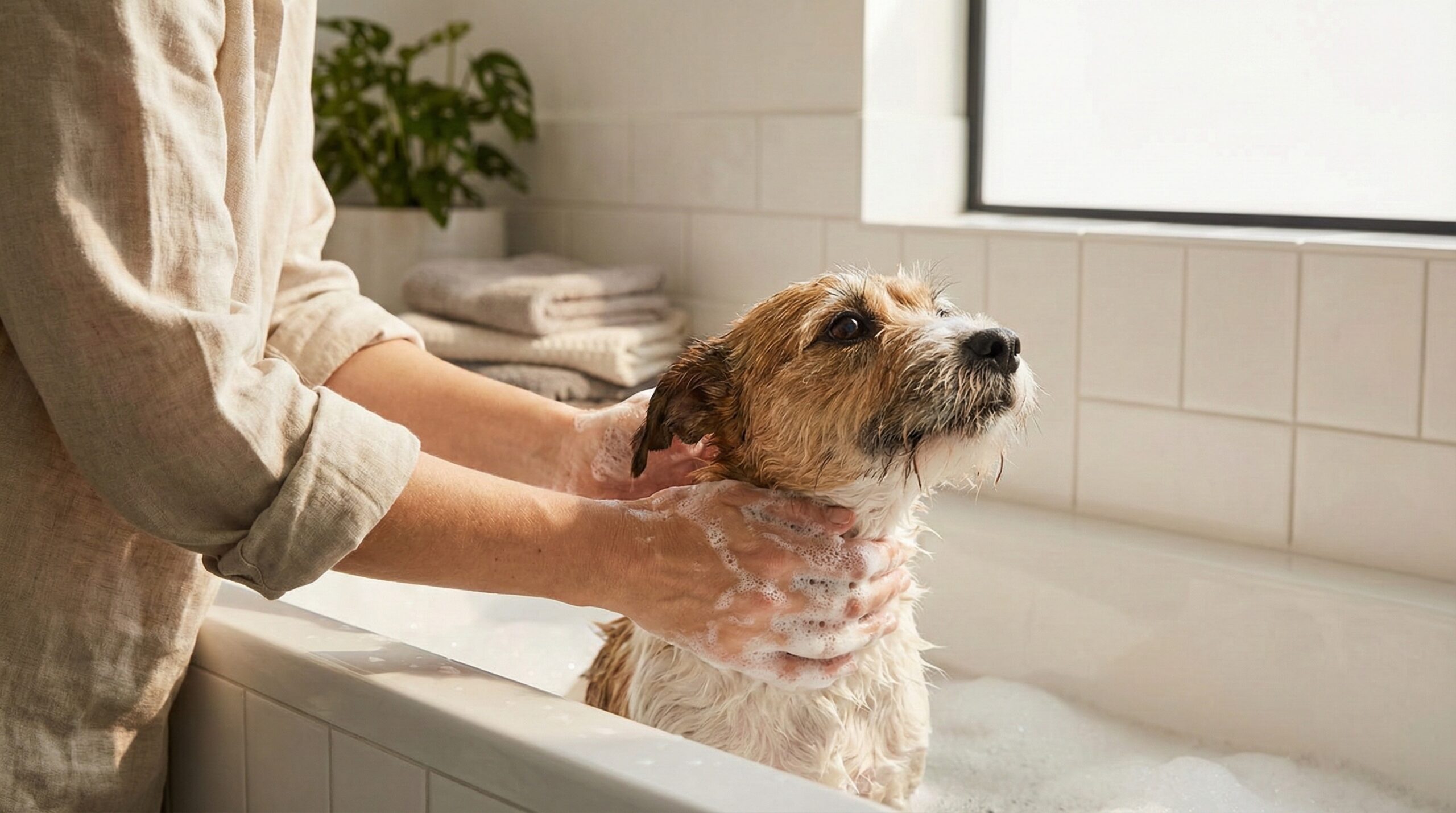
Bathing and product choice also affects skin comfort. The AKC notes that dogs have different skin pH than humans, which is why dog-specific shampoos matter (see AKC guidance on shampoo and dog skin). And PetMD discusses how bathing too often can contribute to dry skin for some dogs (see PetMD bathing-frequency overview). If you’re already seeing dryness or flaking, it’s a good reason to simplify your routine and ask your vet what’s appropriate for your dog’s skin.
FAQ
What brush is gentlest for a dog with sensitive skin?
It depends on coat type. For very short coats, a rubber curry-style brush is often gentler because it doesn’t have pins that can poke; for longer, wavy, or curly coats, a quality slicker used with very light pressure can be gentle in practice because it reduces repeated passes. Whatever you choose, prioritize smooth, rounded contact points and stop if you see redness.
How often should I brush a sensitive-skin dog?
Start low and adjust based on your dog’s coat needs and skin response. A long-haired dog may need brief, frequent sessions to prevent tangles, while a short-haired dog may do fine with occasional brushing during shedding. If brushing causes pink skin, flaking, or increased itching, reduce frequency and talk with your vet about possible underlying skin problems.
Is a slicker brush safe for sensitive skin?
It can be, especially for coats that tangle easily, but the key is using a slicker gently — light pressure, short strokes, and no forcing through knots. Avoid slicker brushing over already-inflamed skin, hot spots, or scabs; in those cases, it’s better to pause grooming and get veterinary guidance.
What should I do if my dog gets red spots or flakes after grooming?
Stop grooming and treat it as a skin issue first. Check for hot spots, parasites, or signs of infection, and contact your vet if redness persists, worsens, or your dog seems very itchy or painful. It can also help to simplify bathing and use dog-appropriate products (the AKC shampoo guidance is a good starting point) while you figure out what’s going on.
How do I detangle without hurting my dog?
Work slowly and don’t start by yanking a brush through a knot. Hold the hair close to the skin to reduce pulling, then pick at the tangle from the ends toward the base using gentle, small movements. If the tangle is tight or close to the skin, consider a professional groomer — forcing it can create micro-injuries that make sensitive skin more reactive.
Can grooming tools cause hot spots?
Grooming tools don’t “create” hot spots out of nowhere, but rough technique (especially repeated brushing over a tangle or irritated patch) can aggravate skin and make inflammation worse. If your dog develops hot spots, intense itching, or oozing sores, stop grooming that area and contact your vet for next steps.
Should I use human shampoo or conditioner to make brushing easier?
No — it’s generally not recommended because dog skin has a different pH than human skin, and using human products can worsen irritation for some dogs. Stick to dog-specific grooming products and use them as directed; the AKC explains why dog-specific shampoo matters.
Bottom Line
For sensitive-skin dogs, your goal is fewer passes, less pulling, and less friction — which usually means a coat-appropriate tool used with a very light hand. Our top pick is the Chris Christensen Big G Dog Slicker Brush because owner reports highlight how efficiently it gets through coat, helping you finish faster with less repetitive brushing. If irritation persists even with gentler technique, pause grooming and talk with your vet to rule out an underlying skin problem.
Affiliate disclosure: Some of the links in this article are affiliate links, meaning we earn a small commission if you make a purchase.