

TL;DR
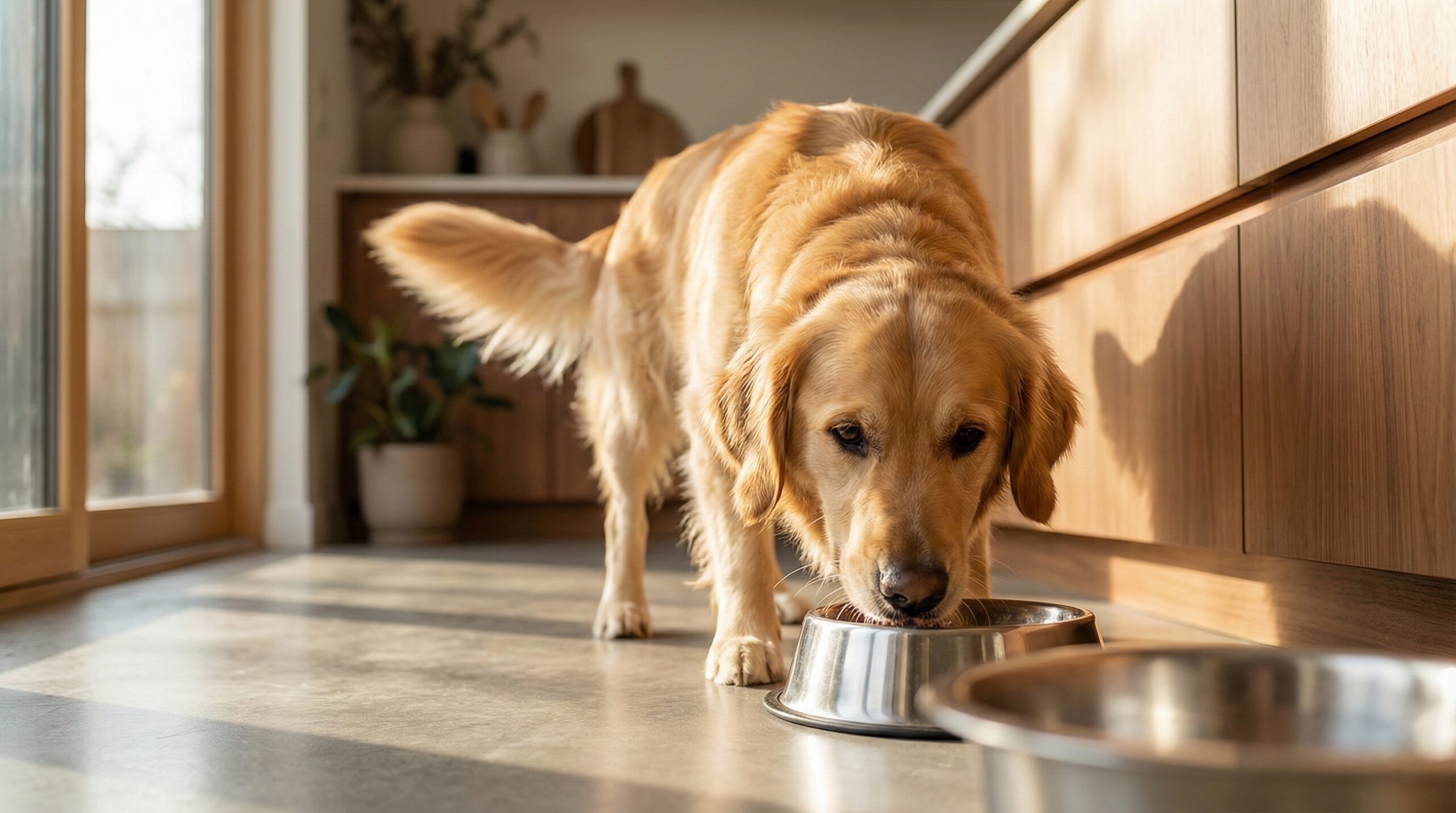
If your dog has a sensitive stomach and tends to inhale meals, a slow feeder can help by reducing gulping and air-swallowing — two common contributors to post-meal burping and regurgitation. For most homes, we’d start with an easy-to-clean maze-style bowl (wide channels, not ultra-deep grooves), then add a lick mat for calming, slower “lick feeding” when stress seems to worsen GI symptoms. If vomiting, repeated regurgitation, or bloat-like signs persist, loop in your vet rather than trying to solve it with a bowl alone.
Top Recommended Dog Slow Feeders
| Product | Best For | Price | Pros/Cons | Visit |
|---|---|---|---|---|
| Outward Hound Fun Feeder Slo Bowl Medium 2-Cup | Most sensitive-stomach fast eaters (kibble or wet) | $10 – $20 | Slows gulping with a proven maze style; grooves can take extra scrubbing after sticky foods | Visit Amazon |
| LickiMat Mini Eco Keeper | Nausea-prone or anxious eaters (toppers/wet foods) | $20 – $30 | Encourages calming licking and slower intake; needs close supervision if your dog pries/chews at edges | Visit LickiMat |
| BuddyandLola Years Dinner Spinner Slow Feeder Puzzle Bowl | Dogs who need more enrichment to avoid gulping | $20 – $30 | Adds puzzle-style pacing for fast eaters; more moving parts can mean more places for residue to hide if not washed promptly | Visit Buddy |
Top Pick: Best Overall Dog Slow Feeder
Outward Hound Fun Feeder Slo Bowl Medium 2-Cup
Best for: A typical sensitive-stomach dog that gulps meals — especially a medium-size adult who finishes kibble in under a minute and then burps, spits up, or looks uncomfortable.
The Good
- Maze-style channels slow down “vacuum eating,” which can reduce air swallowing and post-meal gurgling for some dogs.
- Works for kibble and many wet foods (wet food just takes a bit more cleanup attention).
- Medium 2-cup capacity is a practical everyday size for many dogs without forcing you to stack food too high.
- Huge volume of owner feedback on Amazon (4.5/5 across 62,252 Amazon reviews), so common fit issues show up quickly in the review history.
- Good first step before you change diets — it targets eating speed, not ingredients.
The Bad
- Cleaning can be more work than a plain bowl if you feed sticky canned food, fresh diets, or mashed toppers that lodge in corners.
- Not ideal for determined bowl chewers — supervise early uses and replace if you see deep teeth marks or cracking.
- Some dogs get frustrated with maze patterns; if intake drops, you’ll want to step down to an easier design.
4.5/5 across 62,252 Amazon reviews
“Works as advertised, nothing to assemble, and fairly light. I have a 25 lb maltipoo who inhales her food and then bothers her sister who eats slower. This bowl has absolutely slowed her down which I hope will help with her weight. I think it also helps that she has to think a bit more to get at her food. She also seems happier and less demanding after…” — Verified Amazon buyer (5 stars)
“Keep in mind that this an extreme version of a slow feeder, I purchased a mat type that fit our needs.” — Verified Amazon buyer (3 stars)
Typical price: $10 – $20
Our Take: For most sensitive-stomach fast eaters, this is the most sensible “start here” slow feeder because it meaningfully slows gulping without requiring an extreme puzzle that can cause frustration or skipped calories.
LickiMat Mini Eco Keeper
Best for: Dogs who get queasy or stressy around meals — for example, an apartment dog who eats too fast after a walk and then seems nauseated — especially when you’re using wet food, a small topper, or a smear-style “pre-feed.”
The Good
- Encourages slow, steady licking, which many owners use as a calming routine when anxiety seems tied to GI upset.
- Great for controlled portions of wet food, pumpkin, or a vet-approved GI-friendly pâté (count it toward daily calories).
- When used as a small “starter,” it can slow down the overall pace of the meal and reduce frantic gulping.
- Flat format can be easier on some dogs than deep bowls (especially if they dislike pushing their face into a maze).
- Easy to store and quick to bring out for travel, boarding prep, or post-medication snacks.
The Bad
- Not a great choice for full kibble meals unless you’re mixing kibble into a binder (which can increase cleanup and calories).
- Must be supervised with dogs who pick at edges or try to peel it up — damage can create a choking/obstruction hazard.
- Crevices can hold residue if you let food dry on; sensitive-stomach households generally do best washing immediately after use.
2.9/5 across 14 Trustpilot reviews (source)
“It came apart while she was kicking it and could have killed her through choking or stomach obstruction. Happy to share photos. Cannot reach the company (only if I want to sell…” — Trustpilot review
Price: $20 – $30
Our Take: As a calming, slow “lick feeding” tool for sensitive stomachs, it’s a strong add-on — just keep portions modest and supervise closely if your dog is a determined chewer or mat-flipper.
BuddyandLola Years Dinner Spinner Slow Feeder Puzzle Bowl
Best for: Fast eaters who also need enrichment to stay engaged — for example, a high-energy young adult dog who gulps dinner and then paces or acts unsettled afterward.
The Good
- Puzzle-style approach can slow intake by making the dog work for each bite, which may help with gulping-driven tummy trouble.
- Enrichment element can be helpful if “stress eating” seems to be part of the sensitive-stomach picture.
- Can make mealtime feel longer without you needing to split into many tiny bowls.
- May be a better fit than a tight maze for dogs that get bored and still manage to inhale food from simpler patterns.
The Bad
- Anything with more complexity can be harder to clean thoroughly — which matters for sensitive stomachs where old residue can be a trigger.
- Not the best match for dogs that already eat reluctantly; if they give up mid-meal, you may inadvertently reduce intake.
- Should be retired if it becomes cracked or heavily chewed, since damage can harbor bacteria and create sharp edges.
2.5/5 across 18 Trustpilot reviews (source)
“Trinny suffers from a lot of allergies and a sensitive stomach so the pro & prebiotics in the super yummy chews are great for her. Both dogs can get over excited or anxious so…” — Trustpilot review
Price: $20 – $30
Our Take: This is the “make meals more involving” option — a good fit when a standard maze bowl isn’t enough to slow a determined gulper, as long as you’re willing to stay strict about washing right after meals.
FAQ
Can a slow feeder help vomiting, regurgitation, or burping?
Sometimes. When dogs gulp food, they can swallow extra air and distend the stomach quickly, which may contribute to burping and regurgitation in some dogs. Slowing the pace (with a maze bowl like the Outward Hound Fun Feeder or a lick-based tool like the LickiMat) may help, but repeated vomiting or frequent regurgitation warrants a vet check — and for bloat/GDV risk context, you can read the Merck Veterinary Manual GDV overview.
Are lick mats safe for dogs with sensitive stomachs?
They can be, as long as you control portions and keep hygiene tight. Use a thin smear of an easy-to-digest food (ideally something your dog already tolerates), count it toward daily calories, and wash immediately so fats and proteins don’t go rancid in the texture. If your dog chews or tears at the mat, remove it — swallowing pieces can be dangerous.
How do I know the slow feeder is too hard?
Common signs include pawing and walking away, refusing to finish meals, taking an excessively long time, or showing new frustration behaviors (whining, snapping at the bowl, or skipping food). For sensitive-stomach dogs, reduced intake can make nausea worse — so if this happens, switch to an easier pattern (or use the slow feeder for just part of the meal).
How often should I wash a slow feeder bowl or lick mat?
After every meal. Sensitive-stomach households generally do best with “no leftovers”: rinse immediately, scrub any corners, and run dishwasher-safe items through a hot cycle when possible. Deep grooves and complex shapes can trap residue — and that old food smell/biofilm is exactly what you don’t want if your dog’s GI tract is easily upset.
What if my dog flips the bowl or tries to chew it?
Supervise the first several meals and don’t let a chewer practice on feeding gear. If your dog flips bowls, choose options that sit more securely (non-slip base, wider footprint) and consider feeding on a grippy mat. If you see cracks, sharp edges, or missing bits, replace the feeder immediately.
Can a slow feeder reduce the risk of bloat (GDV)?
Fast eating is often discussed as one risk factor, and slowing down may be part of a broader prevention plan — but it’s not a guarantee and it’s not a substitute for veterinary guidance if your dog is high-risk (deep-chested breeds, prior episodes, or concerning symptoms). For a clinician-facing overview, see the American College of Veterinary Surgeons GDV information.
Should I use a slow feeder if my dog is underweight or picky?
Use caution. If maintaining intake is the priority, start with the easiest slow-down option (or use it for only part of the meal) and track weight and appetite closely. If your dog consistently leaves food behind when you introduce a slow feeder, revert to a simpler setup and ask your vet about other ways to support digestion without reducing calories.
Can I use a slow feeder as part of a broader sensitive-stomach plan?
Yes — and it tends to work best that way. Along with slowing intake, keep portions consistent, feed on a regular schedule, and transition foods gradually when changing diets. If you want a pet-parent-friendly overview that also calls out fast eating as a contributor, Outward Hound’s sensitive-stomach feeding guide is a helpful starting point, but ongoing GI issues should be managed with your vet.
Bottom Line
For most dogs with sensitive stomachs who gulp meals, the Outward Hound Fun Feeder Slo Bowl (Medium 2-Cup) is the best starting point: it slows eating in a straightforward way and has broad owner feedback behind it. If stress or nausea seems to worsen symptoms, add a lick mat routine (like the LickiMat Mini Eco Keeper) for small, controlled portions and calming licking. Whatever you choose, strict wash-after-every-meal hygiene and supervision for chewers are non-negotiable.
Affiliate disclosure: Some of the links in this article are affiliate links, meaning we earn a small commission if you make a purchase.