

TL;DR
The Furminator Undercoat Deshedding Tool is one of the most polarizing items in the grooming world. While it is incredibly efficient at removing loose hair during heavy shedding seasons, it is not a traditional brush. It uses a stainless steel blade that can cut or damage the protective guard hairs of a double coat if used incorrectly. For dogs like Australian Shepherds or German Shepherds, many professionals prefer a dedicated undercoat rake or a slicker brush to preserve the coat’s texture and thermoregulation properties. If you choose to use a Furminator, it must be used with a light touch and limited frequency to avoid “undercoat burn” or a brittle coat texture.
If you have ever shared your home with a Husky, a Labrador, or a Golden Retriever, you know the “tumbleweed” phenomenon. During the change of seasons, your floors can look like a snowstorm of fur happened overnight. Naturally, you want a tool that gets the job done fast. In my years helping owners navigate the world of dog products, the Furminator is consistently the first tool people ask about. But for a double-coated dog, the answer isn’t a simple “yes” or “no.” It requires understanding what that fur actually does for your dog.
Understanding the Double Coat: Why Your Dog’s Fur Needs Special Care
A double coat isn’t just “extra fur.” It is a sophisticated climate-control system. The outer layer consists of “guard hairs,” which are tougher, longer, and designed to repel water and dirt. Beneath those sits the undercoat—a dense, soft layer that traps air to keep your dog warm in winter and cool in summer.
When you use a tool that cuts or thins this coat aggressively, you risk more than just a bad haircut. You can interfere with your dog’s ability to regulate their body temperature. If the guard hairs are damaged, they may grow back wiry or patchy. This is why many groomers emphasize thinning the dead undercoat rather than cutting into the living layers of the fur.
What is the Furminator? (Blade vs. Rake)
It is important to clarify that “Furminator” is a brand, not just one specific tool. However, most people are referring to the **Undercoat Deshedding Tool**. This tool features a fine-toothed stainless steel edge that reaches through the topcoat to pull out loose undercoat hair.
In contrast, the **Furminator Grooming Rake** features rounded pins that rotate. This tool is designed to untangle fur and remove loose hair without the “cutting” action of the deshedding blade. When you are shopping for your dog, knowing the difference is vital for their skin health and coat integrity.
| Product Name | Best For | Price Range | Pros/Cons | Visit |
|---|---|---|---|---|
| Furminator Undercoat Deshedding Tool | Heavy shedders with thick undercoats | $30 – $45 | Efficient hair removal / Risk of coat damage | |
| Furminator Grooming Rake | Long-haired dogs prone to tangles | $12 – $18 | Gentle on skin / Not for heavy deshedding | |
| Oster Undercoat Rake | Professional-grade deshedding | $18 – $25 | Very durable / Requires proper technique | |
| SleekEZ Deshedder | Short to medium double coats | $15 – $22 | Simple design / Can be abrasive if pressed hard | |
| Top Paw Shedding Rake | Budget-friendly maintenance | $10 – $15 | Good value / Not as ergonomic | |
| Rubber Curry Comb | Labradors and short-coat shedders | $6 – $12 | Extremely safe / Doesn’t reach deep undercoats |
What Real Users Are Saying (Reddit Insights)
General Sentiment
The online consensus is a mix of awe and caution. On platforms like Reddit, owners of high-shedding breeds often describe their first experience with the Furminator as a “miracle” because of the sheer volume of hair it removes. However, as the initial excitement fades, long-term users often warn about changes in coat quality. The general vibe is that it is a powerful tool that requires a “less is more” philosophy.
Top Complaints & Warnings
The most common warning shared among groomers and experienced owners is the risk of “undercoat burn.” This happens when you apply too much pressure or go over the same spot too many times, leading to skin irritation. Another frequent complaint involves the “razor” effect.
“Our groomer has always advised against using them since they’re more of a razor rather than a brush. It often causes the topcoat to grow back weirdly.” — r/AustralianShepherd
“If used improperly, it’s going to harm the coat. I only use an undercoat rake and a high velocity blow dryer.” — r/dogs
Budget Tips & Value Picks
For those on a budget, many Reddit users suggest skipping the high-end brand names in favor of a simple stainless steel undercoat rake. Community members often point out that tools like the Oster rake provide a similar effect to professional grooming at a lower price point and with less risk of damaging the guard hairs. For short-haired double-coated dogs like Labs, the rubber curry comb (often called a ZoomGroom) is the gold-standard recommendation for daily maintenance without the risk of blades.
Detailed Product Reviews
Furminator Undercoat Deshedding Tool
In my experience, no other tool removes fur as quickly as this one. The “FURejector” button is a clever touch—you just click it to clear the blade of hair, which keeps the process moving. However, when I use this on a dog with a thick undercoat, I have to be incredibly conscious of the “blade” nature of the teeth. If you press too hard, you aren’t just pulling loose hair; you are scraping the skin. It’s also worth looking into Furminator reviews for senior dogs if your pet has thinner skin due to age.
The Good
- Unmatched efficiency during “coat blowing” season.
- Ergonomic handle reduces hand fatigue during long grooming sessions.
- Available in various sizes (small, medium, large) to fit your dog’s frame.
The Bad
- High risk of skin irritation if used on the same area twice.
- Can leave the topcoat looking “choppy” if not used with a steady hand.
Our Take: Best for heavy-shedding dogs like Labs or GSDs who need rapid hair removal. Skip if your dog has a very thin coat or sensitive skin.
Furminator Grooming Rake
This is the “safe” sibling in the Furminator family. Instead of a blade, you get rounded pins. When I used this on a Golden Retriever with light tangles, it glided through the fur without any pulling or discomfort. It won’t remove nearly as much hair as the deshedding tool, but it’s much better for daily use. If your dog has mobility issues, you might want to compare this with a Furminator vs Hertzko comparison for dogs with arthritis to see which handle is easier to grip.
The Good
- Rotating pins prevent painful hair pulling.
- Extremely safe for puppies and beginners.
- Great for smoothing out the “feathering” on legs and tails.
The Bad
- Won’t significantly reduce shedding on its own.
- Pins can bend if you hit a very thick mat.
Our Take: Best for daily maintenance and long-haired dogs prone to light tangles. Skip if your primary goal is to stop the “fur-nado” in your living room.
Oster Undercoat Rake
This tool is a staple in professional grooming kits. It looks intimidating with its curved metal hooks, but it is surprisingly gentle when used correctly. In practice, the Oster rake pulls the dead undercoat out from the bottom up, rather than cutting from the top down. You’ll find it incredibly satisfying to see the “piles” of fur it can produce in just 10 minutes of work. For more specialized care, check out alternatives for dogs with allergies if your dog has reactive skin.
The Good
- Professional-grade durability that lasts for years.
- Excellent at “thinning” thick coats without ruining the texture.
- Highly effective for northern breeds like Huskies and Malamutes.
The Bad
- The hooks are sharp; you must keep the tool parallel to the skin.
- Heavier than plastic alternatives.
Our Take: Best for owners who want a pro-level tool to manage a “blown” coat. Skip if you aren’t comfortable handling a tool with metal hooks.
SleekEZ Deshedder
The SleekEZ is essentially a wooden handle with a unique serrated blade. It was originally designed for horses, but it has become a cult favorite for dog owners. When you pull it across a short-haired double coat (like a Lab or Beagle), it grabs the loose “pepper” hairs that other brushes miss. It feels very sturdy in the hand, but you need to be careful with the pressure you apply, as it can be quite abrasive on bony areas.
The Good
- Very simple, no-moving-parts design.
- Works wonders on furniture and car upholstery too.
- Great at removing dried mud and dander along with the fur.
The Bad
- Not effective on very long, flowing coats (like a Pomeranian).
- Can be rough on dogs with very little body fat.
Our Take: Best for short-haired double-coated dogs and multi-pet households. Skip if your dog has long, silky hair.
Top Paw Shedding Rake
If you need something today from a big-box store, this is usually the one you’ll find. It performs similarly to the Oster but at a lower price point. It lacks the premium weight and balance of professional tools, but it gets the job done for occasional grooming. It is a solid entry-point into the world of undercoat rakes.
The Good
- Low price point makes it an easy “first tool” to try.
- Available at most major pet retailers.
- Good at reaching deep into thick winter coats.
The Bad
- Handle grip can become slippery if your hands are sweaty.
- Teeth aren’t as finely finished as premium brands.
Our Take: Best for budget-conscious owners who need an immediate solution for a shedding Husky or Aussie. Skip if you prefer a tool with a lifetime warranty.
Rubber Curry Comb
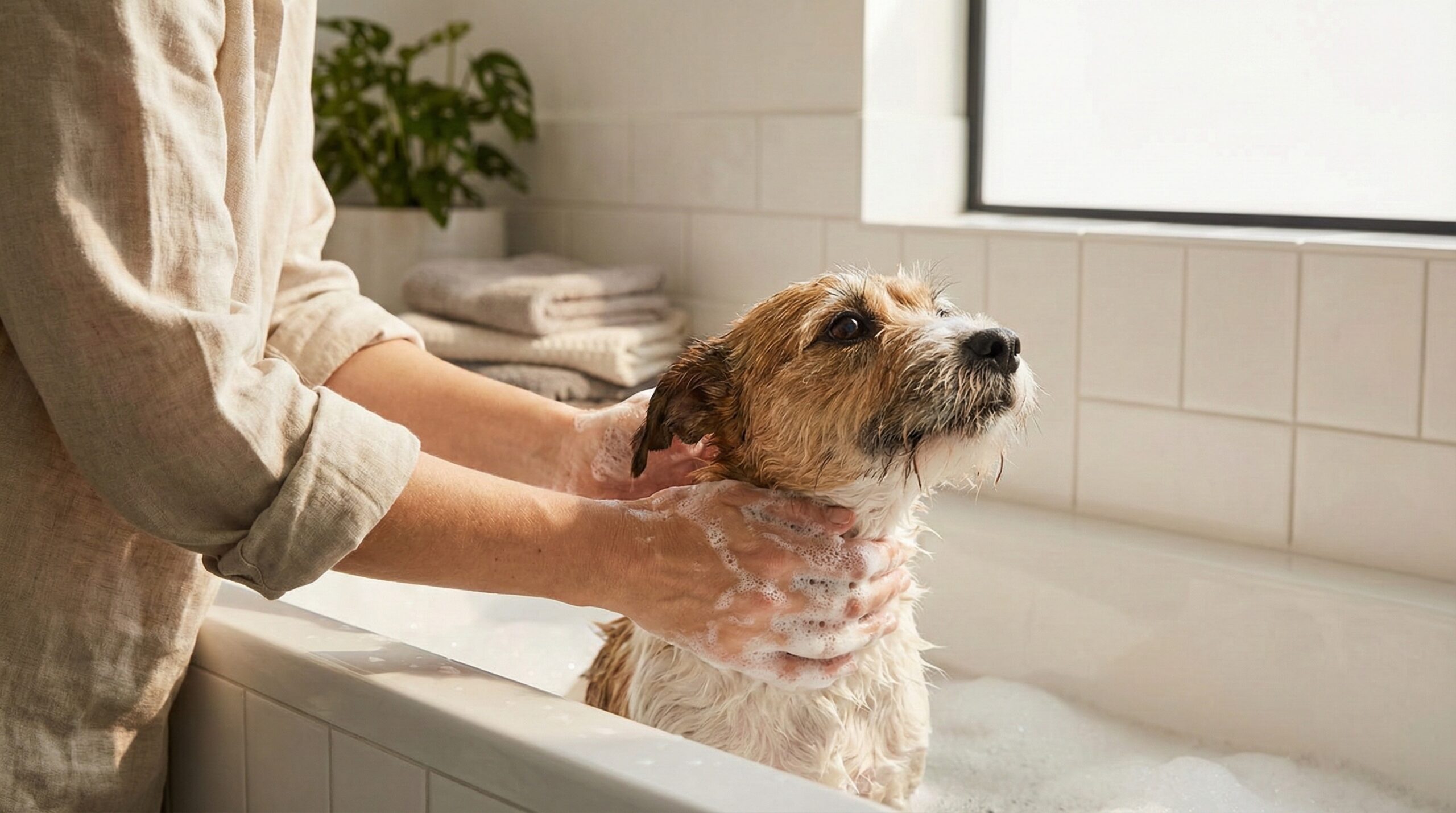
I always recommend a rubber curry comb for the “bath time” phase of grooming. Using this in a circular motion while your dog is lathered up with shampoo is a total “win.” It loosens the hair right at the root, making the post-bath brush-out much easier. It’s the safest tool on this list because there is zero risk of cutting the skin or the coat. For more health-conscious grooming tips, visit our pet health and care hub.
The Good
- Massages the skin, which most dogs find relaxing.
- Impossible to “over-brush” or cause skin damage.
- Easy to clean—just rinse and dry.
The Bad
- Won’t penetrate the thick undercoat of a dog like a Malamute.
- Hair can fly everywhere if used on a dry coat.
Our Take: Best for Labradors, Pugs, and short-coated shedders. Skip if your dog has a thick, long mane.
The Science of Coat Damage: Can It Really Ruin a Double Coat?
You may have heard horror stories about the Furminator “ruining” a coat. Scientifically, this happens when the tool’s blade architecture shears the guard hairs. Guard hairs have a specific structure that tapers at the end; once cut, they grow back with a blunt, coarse edge. This changes the “hand-feel” of the dog—turning a soft, silky coat into something wiry and brittle. Furthermore, because the guard hairs protect the skin from UV rays, thinning them out too much can actually lead to sunburn in the summer.
How to Restore a Damaged Double Coat
If you’ve accidentally gone too far with a bladed tool, don’t panic. The coat will eventually reset, but it takes time and internal support.
Dietary Support for Hair Growth
Quality nutrition is the building block of a healthy coat. Switching to a formula rich in Omega-3 and Omega-6 fatty acids can speed up the recovery process. I often suggest something like Purina Pro Plan Sport Performance for its high protein and fat content, which provides the necessary “fuel” for follicle repair.
Grooming Regimen for Recovery
While the coat is growing back, put away the blades. Stick to a gentle slicker brush and a pin brush. Focus on moisturizing shampoos and conditioners that strengthen the hair shaft. Regular bathing (every 4-6 weeks) with a high-velocity dryer is actually one of the best ways to remove dead undercoat without the mechanical damage of a brush.
Best Dog Brushes by Segment
Best for Australian Shepherds
The Oster Undercoat Rake is your best friend here. It preserves the beautiful “feathers” while pulling out that thick undercoat. Avoid using the bladed deshedder on their pants or tail as it can make them look jagged. Link to Oster Undercoat Rake.
Best for German Shepherds
The Furminator Undercoat Deshedding Tool is actually quite effective for the dense, shorter fur on a GSD’s back and sides, but you must be gentle. For the neck area, switch to a rake. Link to Furminator Undercoat Deshedding Tool.
Best for Labradors
A Rubber Curry Comb combined with a SleekEZ is the ultimate combo for Labs. The curry comb gets the deep stuff during the bath, and the SleekEZ takes care of the surface shedding daily. Link to SleekEZ Deshedder.
Frequently Asked Questions
Does the Furminator actually cut the dog’s hair?
Technically, yes. The Undercoat Deshedding Tool uses a stainless steel edge that acts similarly to a #40 clipper blade. While it is designed to grab and pull loose undercoat hair, it can also shear through the guard hairs if you apply too much pressure or use it too frequently. This is why many owners of show dogs prefer using an Oster Undercoat Rake instead, which focuses on pulling rather than cutting.
How do I fix my Labrador’s coat after using a Furminator?
If the coat looks patchy or dull, the first step is to stop using the bladed tool. Switch to a Rubber Curry Comb to stimulate blood flow to the skin without further damage. You should also ensure your dog is getting enough Omega-3s through their diet. Recovery can take a full shedding cycle (roughly 6 months), so patience is key as the new guard hairs grow in.
What is the difference between a shedding rake and a shedding blade?
A shedding rake, like the Top Paw Shedding Rake, typically has long pins designed to reach deep into a thick coat to pull out dead undercoat without cutting. A shedding blade (like the Furminator or SleekEZ) has small, sharp teeth that grab hair on the surface and middle layers. Rakes are generally safer for long-haired double coats, while blades are more efficient for shorter, dense coats.
Can using a Furminator cause ‘undercoat burn’?
Yes, “undercoat burn” is a common term for skin irritation caused by over-brushing. Because the teeth on a deshedding tool are metal and relatively sharp, passing over the same area multiple times can scrape the top layer of the skin. To avoid this, always keep the tool moving and limit your sessions to 10-15 minutes, ensuring you don’t press down into the skin.
Is the Furminator safe for Australian Shepherds?
It can be used with extreme caution, but many Aussie owners advise against it. The breed’s long, silky coat is easily damaged by blades. An Aussie’s coat relies on its length for protection, and cutting the undercoat can lead to “frizziness.” A combination of a slicker brush and a long-pinned rake is usually the safer and more effective choice for this specific breed’s texture.
Final Verdict: Should You Use a Furminator on Your Double Coated Dog?
After testing and reviewing dozens of grooming options, my stance is this: the Furminator is a specialized tool that belongs in your kit, but it shouldn’t be your only brush. Think of it like a power tool—it’s great for heavy-duty work but too aggressive for daily maintenance.
If you have a dog with a very thick, dense undercoat and you are struggling to keep up with the shedding in 2026, the Furminator can save you hours of vacuuming. However, you must respect the blade. For most owners, a high-quality undercoat rake and a consistent bathing routine will provide a healthier long-term result for the coat. Your dog’s fur is their primary protection against the elements; keep it intact, and they will stay much more comfortable through the seasons.
Some links below are affiliate links, meaning we earn a small commission if you make a purchase.
Affiliate disclosure: Some of the links in this article are affiliate links, meaning we earn a small commission if you make a purchase.