

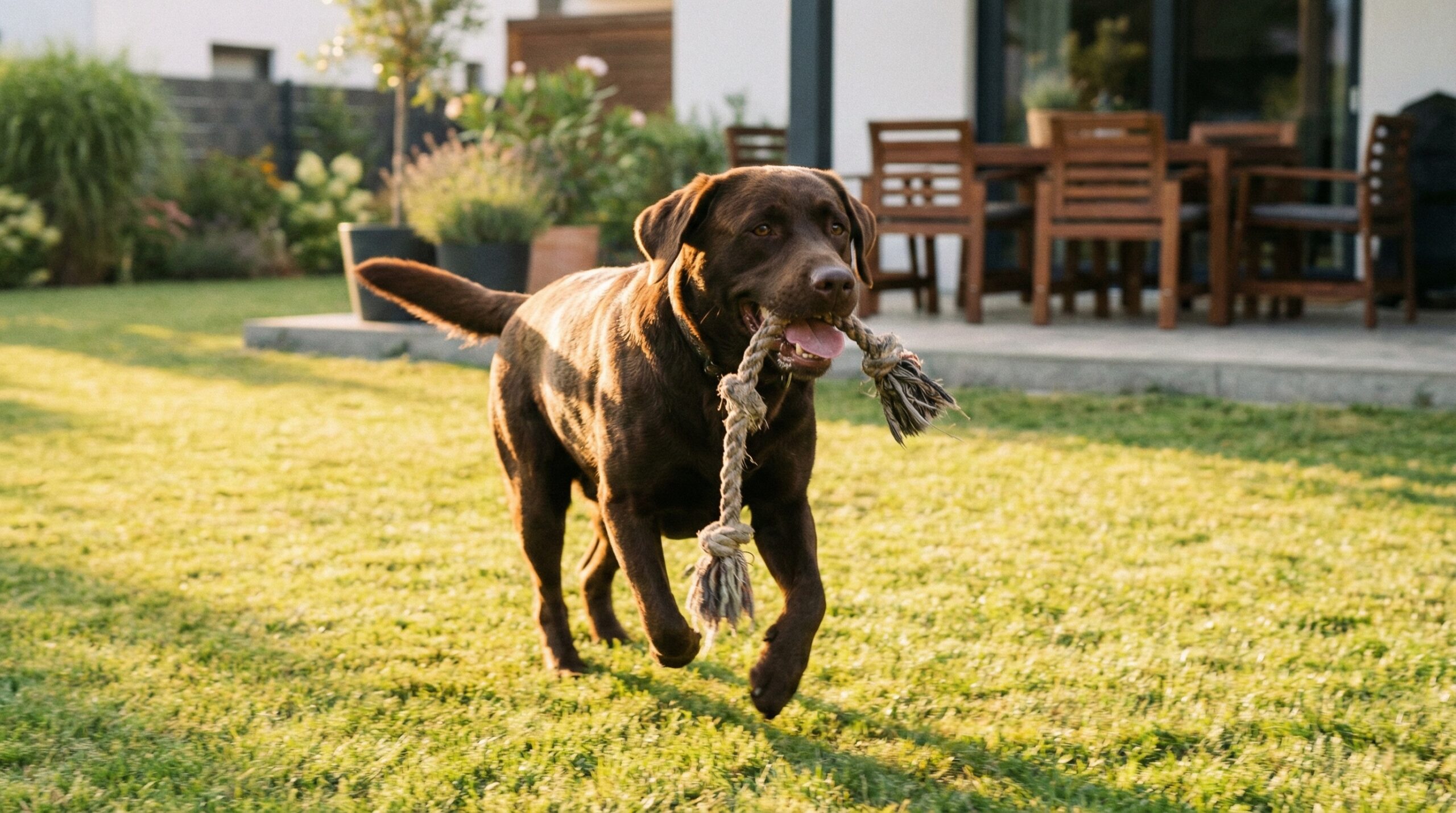
TL;DR
If your “aggressive chewer” mostly needs a long, lick-heavy enrichment session (crate time, calm-down time, slow feeding), KONG-style stuffing toys are usually the cleaner fit — but West Paw’s stuffables can be easier to fill and wash. If your dog is more of a fetch-and-gnaw type, many West Paw Zogoflex toys strike a nicer balance of durability and a bit of flex that can be gentler on teeth. Either way, safety comes down to picking the right size, supervising early sessions, and retiring the toy as soon as you see deep grooves, sharp ridges, cracks, or missing chunks.
Top Recommended Dog Products
| Product | Best For | Price | Pros/Cons | Visit |
|---|---|---|---|---|
| WEST PAW Zogoflex Hurley Dog Bone Chew Toy Small | Fetch + tough, simple chewing | $10 – $20 | Easy to throw and spot; can develop tooth-catching crevices over time | Visit Amazon |
| WEST PAW Zogoflex Toppl Large | Stuffing + freezing for enrichment | $20 – $30 | Great KONG-style alternative; some dogs work the rim hard and wear it down | Visit Amazon |
| WEST PAW Qwizl Durable Zogoflex Dog Puzzle Toy Small | Treat holding (sticks/jerky) + carry | $20 – $30 | Extends treat time; openings can be too small for some treats | Visit Amazon |
WEST PAW Zogoflex Hurley Dog Bone Chew Toy Small
Best for: Dogs who alternate between chewing and fetch (and owners who want a simple, no-stuff shape that’s easy to rinse off).
The Good
- Multipurpose “bone” shape works for fetch, light tug, and casual chewing sessions.
- Owner feedback often highlights strong durability for determined chewers.
- Bright colors are easier to find in grass and dirt than darker rubber toys.
- Simple shape means fewer hidden cavities — typically easier to clean than deep stuffables.
The Bad
- Some aggressive chewers eventually create crevices/gouges that can catch teeth or create sharp edges.
- If your dog is a “chunker” (breaks pieces off), you’ll still need close supervision and earlier retirement.
- Replacing durable toys can still add up when you’re managing a power chewer long-term.
4.4/5 across 9,196 Amazon reviews
“My dog went crazy for this toy the second I gave it to him.He is an 8-month-old 7.5 pound Yorkie puppy, an aggressive chewer on the tail end of teething. He has shown no mercy to this toy and yet there’s not a dent in it. That’s why I got it because the material holds up to aggressive chewing. My puppy has confirmed that!It keeps him entertained for a long…” — Verified Amazon buyer (5 stars)
“The first one we bought took our now 1-yo 23lbs corgi about a month to show any visible damage so it felt quite promising as a chew toy compared to the insanely hard nylabones he had. At some point, there were crevices that we sawed off for his own safety because he could really get his teeth deep into those. There does not seem to be a way to smooth out…” — Verified Amazon buyer (3 stars)
Typical price: $10 – $20
“Goughnuts, West Paw and Black Kongs are solid choices for toy brands.” — r/DogAdvice discussion
“At some point, there were crevices that we sawed off for his own safety because he could really get his teeth deep into those.” — verified buyer, 3 stars
Our Take: If you’re choosing between KONG and West Paw for an aggressive chewer, the Hurley is a strong example of what West Paw does well: interactive play first, with chew resistance that works for many dogs. We like it most for supervised chewing “breaks” and outdoor games — not as an all-day, unsupervised chew for dogs who can gouge deep channels into rubbery materials.
WEST PAW Zogoflex Toppl Large
Best for: Frozen fillings and long-lasting enrichment — especially if your goal is more licking and problem-solving, not nonstop gnawing.
The Good
- Popular alternative to classic KONG-style stuffing toys for food enrichment.
- Easy to load with wet food, soaked kibble, or dog-safe “smear” layers, then freeze for longer sessions.
- Thick, rubber-like feel that many dogs enjoy chewing after they’ve worked out the food.
- Can keep busy dogs mentally engaged, which often reduces the “I must destroy this toy” intensity.
The Bad
- Some owners buy a second piece to create a tighter “set,” which increases total cost.
- Not a pure chew bone — determined dogs may focus on the rim/edge and cause wear sooner than expected.
- If your dog can peel or deform edges into swallowable bits, it’s not a leave-down toy.
4.6/5 across 9,454 Amazon reviews
“Having a dog who could double as a professional chewer, I was on the hunt for something that could withstand his "enthusiasm" while keeping him mentally engaged. Enter the West Paw Puzzle Chew Toy, a true game-changer in the world of canine entertainment.Durability that Endures:This isn’t just another chew toy that surrenders to your dog’s jaws within…” — Verified Amazon buyer (5 stars)
“This is only half of the product however ( deducted one star for that ) thick rubber chewy that dog loves to chomp on – the two sides ( when you get the second piece that fits into it ) snugly close and it’s good entertainment for pup when filled with treats of your choice ( we use puppy chow or a little cat dry food ) … fun colors too” — Verified Amazon buyer (4 stars)
Typical price: $20 – $30
“thick rubber chewy that dog loves to chomp on – the two sides ( when you get the second piece that fits into it ) snugly close” — verified buyer, 4 stars
Our Take: In a KONG vs. West Paw debate for aggressive chewers, the Toppl is West Paw’s best argument if your main goal is stuffing/freeze enrichment. It’s also a nice option if you’re trying to encourage licking over hard, repetitive “grind chewing.” Just treat it like an enrichment feeder: supervise early, check the rim often, and retire it once the edge starts turning into tooth-catching grooves.
WEST PAW Qwizl Durable Zogoflex Dog Puzzle Toy Small
Best for: Holding treats (like jerky strips or stick-shaped chews) to slow down chewing and extend engagement for dogs who like to carry toys around.
The Good
- Puzzle/treat-holder format can stretch a “fast chewer” into a longer, more controlled session.
- Often used as a safer way to manage stick-style chews (with supervision) so dogs don’t swallow the last chunk.
- Good “carry toy” shape — many dogs like to trot around with it and settle in to work on the treat.
- Typically simpler to rinse than fabric toys, and less tempting to shred than plush.
The Bad
- Openings can be tight depending on the treat size/shape you want to use.
- Not the best choice if your dog destroys puzzle toys by biting down hard to defeat the structure.
- As with any treat holder, you still need to watch for cracking, deformation, or torn sections that could become swallowable.
4.4/5 across 8,292 Amazon reviews
“A great toy for our easygoing, friendly, and laid-back dog. The toy is designed for gentle play and relaxed entertainment. Made from soft plastic this type of toy is perfect for dogs that enjoy carrying toys around, lounging with them, or lightly chewing. Our dog loves to carry it everywhere with her. You can fit almost any small treat inside we usually use…” — Verified Amazon buyer (5 stars)
“Material is durable for bigger dogs. Not easy to add treats for further engagement due to very small openings.” — Verified Amazon buyer (3 stars)
Typical price: $20 – $30
Our Take: For aggressive chewers, the Qwizl can work best as a “managed chewing tool” rather than a free-for-all chew toy. If your dog tends to inhale chews or tries to swallow the last piece, a holder can slow things down — but only if you can reliably fit the treats you use and your dog doesn’t respond by trying to crush the toy itself.
Pick by the job: stuffing/licking vs fetch vs chew outlet
“Aggressive chewer” is a useful warning label, but it doesn’t describe how your dog destroys toys. That matters because KONG and West Paw tend to shine in different roles:
- Long-duration enrichment (crate time, separation anxiety routines, rainy-day boredom): Choose a stuffable toy you can pack and freeze. West Paw’s Toppl is purpose-built for this style, and many owners cross-shop it with classic KONG-type stuffables.
- Fetch + interactive play (with some chewing in-between throws): Zogoflex shapes like the Hurley are usually a better match than deep stuffables. They’re quicker to rinse, easier to spot outdoors, and less likely to trap old food in internal cavities.
- Independent “I need to chew something” outlet: Be cautious with any “tough” toy. For power chewers, durability is only half the story; you want a toy that wears in a predictable way and doesn’t turn into sharp ridges or swallowable chunks.
Chew style also changes the pick:
- Gnawers (steady molar grinding) often do better with slightly flexible materials and activities that encourage licking.
- Scissor chewers (incisors “cutting” edges) can create dangerous flaps and chunks quickly — supervision matters more than brand.
- Chunkers (break pieces off) need the strictest rules: short sessions, frequent checks, and fast retirement at the first missing piece.
Failure mode matters more than durability
With aggressive chewers, the scariest problems aren’t “the toy finally broke.” It’s the in-between phase where it’s half broken: deep gouges, sharp ridges, and pieces that are just barely holding on.
What to do in real life:
- Inspect often. For true power chewers, that can mean a quick check after each session, plus a closer look weekly.
- Retire early. Discard a toy when you see cracks, missing chunks, deep grooves, sharp ridges, or any spot where a tooth could get stuck.
- Watch the first 3–5 sessions. That’s when you learn your dog’s “failure pattern” with that specific shape and material.
- Don’t keep the “old favorite” around. A toy that was safe when new can become riskier once it’s heavily worn.
If you’re ever worried your dog swallowed part of a toy, take it seriously. The ASPCA Animal Poison Control is a reputable place to start for guidance, and your vet can advise you on what symptoms require urgent care.
Tooth-risk tradeoff: hardness vs cracked teeth
Many owners assume “harder = safer” because the dog can’t tear it apart. But very hard chewing can increase the risk of dental injury for some dogs — especially relentless gnawers that clamp down with their back molars again and again.
General, vet-aligned safety thinking:
- If it’s rock-hard with zero give, limit unsupervised time. Some dogs can crack teeth on very hard chews and toys. The American Veterinary Dental College (AVDC) has owner resources that discuss tooth fractures and why chewing habits matter.
- Consider “licking-heavy” enrichment. Frozen fillings (wet food, soaked kibble, dog-safe yogurt if your dog tolerates dairy) can shift your dog from grinding to licking.
- Watch for dental warning signs. One-sided chewing, reluctance to chew, pawing at the mouth, blood on toys, or sudden avoidance can all be reasons to pause hard-toy time and call your vet.
Also note: the Veterinary Oral Health Council (VOHC) accepted products list is a useful reference for dental-care items (like certain chews, rinses, and toothpastes), but it’s not a “this toy is tooth-safe” stamp for every tough chew toy on the market. It’s still a good reminder that oral health is a real safety category — not just an afterthought.
Size, shape, and cleaning: safety plus longevity
In KONG vs West Paw discussions, sizing and geometry can matter as much as the brand. An “aggressive chewer” can turn the wrong size into a choking risk fast.
- Size up when in doubt. A safe toy should be too large to swallow and shouldn’t fit fully behind the back molars. If you’re between sizes, aggressive chewers usually need the larger option.
- Prefer thicker cross-sections. Thin ends, narrow necks, and sharp angles can become “starting points” where chunkers begin tearing.
- Avoid suction/wedging issues. Some hollow shapes can create suction or wedge in a dog’s mouth depending on size and chew style — supervise early uses to be sure your dog isn’t struggling to release it.
- Choose what you can actually clean. Stuffables that trap old food get gross fast. Rinse after each use, scrub regularly, and retire if odor persists after cleaning or the inside surface becomes too rough to sanitize.
If your dog eats parts of toys, be especially cautious with any design that can tear into strips or chunks. Foreign body obstructions are a real emergency; if you’re worried, contact your vet promptly and reference reputable guidance like the ASPCA guidance on intestinal blockage.
FAQ
Which is better for aggressive chewers, KONG or West Paw?
Choose based on the “job.” For frozen stuffing, licking, and slow feeding, many owners find KONG-style stuffables a natural fit, while West Paw’s Toppl is a popular alternative that can be easier to load and clean. For fetch-focused play with some chewing, West Paw Zogoflex shapes (like the Hurley) are often a better match than a deep stuffable.
Is a West Paw Toppl comparable to a classic stuffable toy?
Yes. Both are designed for food enrichment: you fill them, optionally freeze them, and let your dog work out the food. The practical differences are how easy they are to pack, how your dog attacks the rim/edge, and how easy the shape is to thoroughly wash afterward.
How do I know when to throw a tough chew toy away?
Retire it at the first sign of sharp ridges, cracks, deep gouges, missing chunks, or any change that creates a tooth-catching crevice or a swallowable piece. For aggressive chewers, “still mostly intact” isn’t the standard — safe failure is.
Are harder toys always safer because they last longer?
No. Hardness can improve longevity, but very hard chewing can increase tooth-fracture risk in some dogs, and some hard materials fail with sharp edges. If you’re concerned about cracked teeth, review the American Veterinary Dental College (AVDC) owner resources and ask your vet what’s appropriate for your dog’s dental history.
What size toy should I choose for a power chewer?
Pick a size that your dog can’t fit fully into their mouth or swallow, and when you’re between sizes, size up. A good rule is that the toy should stay in front of the back molars rather than slipping behind them. If your dog can compress or deform a toy enough to make it swallowable, it’s not a safe unsupervised option.
What should I do if I think my dog swallowed part of a toy?
Contact your vet right away, especially if you notice vomiting, gagging, lethargy, loss of appetite, abdominal pain, or inability to keep food down. You can also consult the ASPCA Animal Poison Control for guidance on what to watch for and how urgently to act.
Bottom Line
For aggressive chewers, KONG and West Paw aren’t truly “one is better” brands — they’re better at different jobs. West Paw’s Zogoflex lineup can be a strong pick for fetch-plus-chew play and flexible enrichment options like the Toppl, while KONG-style toys are often the go-to for classic frozen stuffing routines. Whichever you buy, prioritize safe sizing, supervise early sessions, and retire the toy as soon as wear turns into sharp edges, deep grooves, or missing pieces.
Affiliate disclosure: Some of the links in this article are affiliate links, meaning we earn a small commission if you make a purchase.