

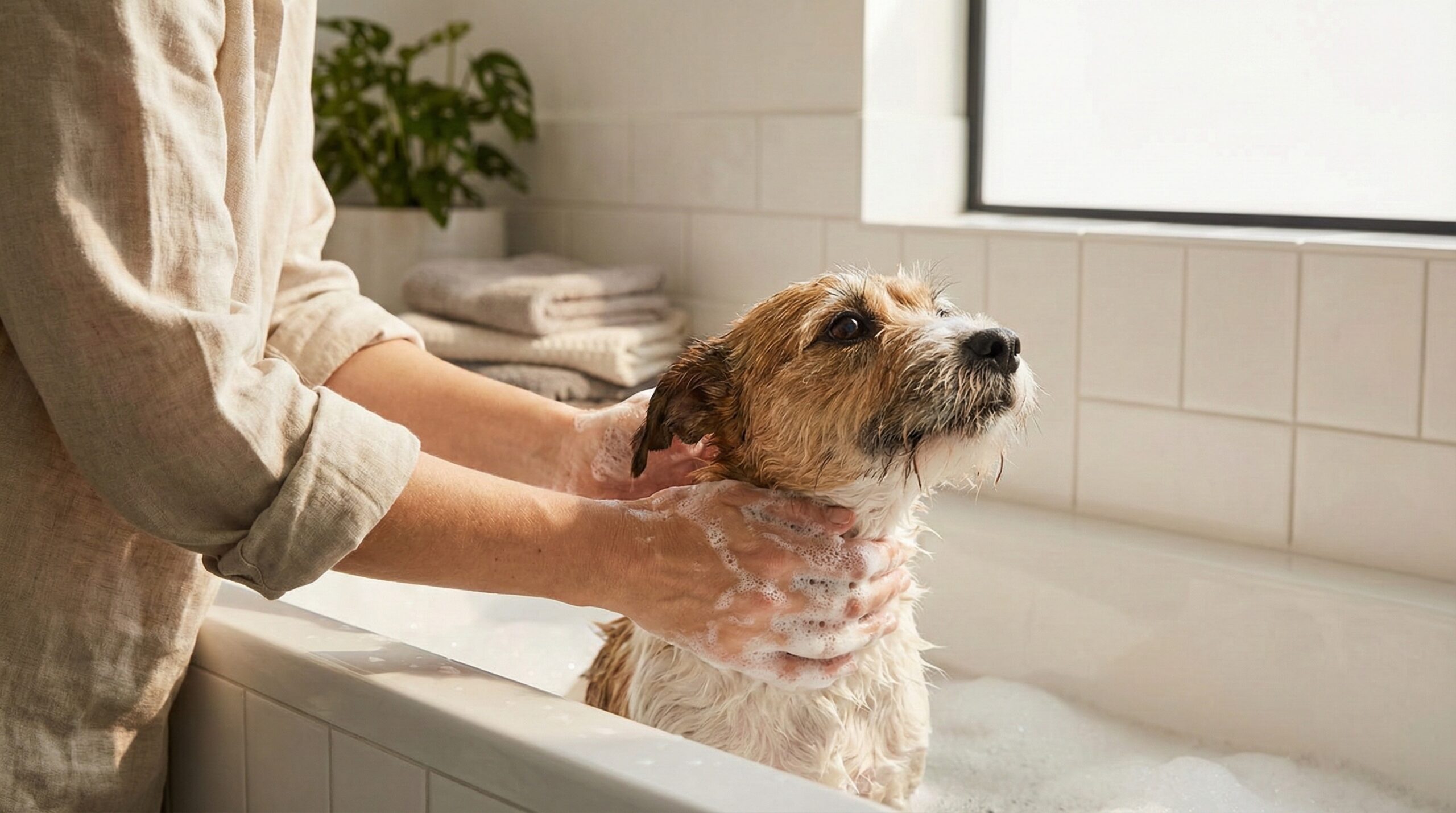
TL;DR
For most senior dogs, the safest, least-stressful grooming routine is a gentle brush-and-comb approach done in short sessions, plus consistent nail maintenance to support comfortable walking. Choose tools that minimize tugging, scratching, noise, and heat — and if you hit tight mats, sore skin, or your dog shows pain, it’s worth pausing and calling your vet or a professional groomer.
Top Recommended Dog Grooming Tools for Senior Dogs
| Product | Best For | Price | Pros/Cons | Visit |
|---|---|---|---|---|
| Hertzko Self Cleaning Slicker Brush for Dogs and Cats | Gentle daily brushing for light tangles | $10 – $20 | Easy cleanup with self-cleaning pins; not ideal for severe matting | Visit Amazon |
| Millers Forge Steel Pet Nail Clipper 743C with Safety Stop | Frequent small nail trims for stiff joints | $0 – $10 | Sharp, clean cuts with a safety stop; guard can block visibility | Visit Amazon |
| Chris Christensen 7.5 in. Greyhound Butter Comb Fine/Coarse | “Comb-check” finishing to find hidden snags | $10 – $30 | Fine/coarse spacing helps confirm you can reach skin; listing-based pick with limited owner feedback here | Visit Amazon |
Top Pick: Best Overall Dog Grooming Tools for Senior Dogs
Hertzko Self Cleaning Slicker Brush for Dogs and Cats
Best for: Older dogs who need a gentle, quick brush-out (think a 10–60 lb senior who tolerates 3–5 minute sessions) to manage everyday shedding and minor tangles.
The Good
- Self-cleaning button makes it easier to remove collected hair quickly, which helps when you’re keeping sessions short for an arthritic senior.
- Appropriate for both long and short coats for general maintenance — useful if you have multiple pets with different coat types.
- Works well as your “first pass” brush before you follow up with a metal comb to confirm you can reach the skin without snagging.
- Owner feedback often highlights gentle detangling when used with light pressure and short strokes.
The Bad
- Not the right tool for tight mats close to the skin; trying to power through can be painful and risky on thin senior skin.
- Some buyer reviews mention durability concerns around the handle over time.
4.5/5 across 91,960 Amazon reviews
“I absolutely love the Hertzko Self-Cleaning Slicker Brush! It’s hands-down one of the easiest pet grooming tools I’ve ever used. The retractable bristles make cleaning out hair a breeze — no more picking through stuck fur or making a mess.It works beautifully on both my long-haired and short-haired pets, gently removing loose hair and tangles without…” — Verified Amazon buyer (5 stars)
“So far ok! I thought I would give them another chance! The one before this one broke early on and I did a fix and it finally gave out. If this one breaks (handle), I will not buy again!” — Verified Amazon buyer (3 stars)
Typical price: $10 – $20
“It works beautifully on both my long-haired and short-haired pets, gently removing loose hair and tangles without scratching or irritating their skin.” — verified buyer, 5 stars
Our Take: If you want one senior-friendly brush to keep by the couch for quick, calm grooming blocks, this is a solid pick — just keep pressure light and use a comb to “double-check” you’re not skipping tangles near the skin.
Millers Forge Steel Pet Nail Clipper 743C with Safety Stop
Best for: Senior dogs whose nails get long fast (especially if they’re walking less) and need frequent, small trims to help with traction and gait.
The Good
- Sharp blades help make cleaner cuts, which can reduce “crushing” pressure on thick, older nails.
- Built-in safety stop can give nervous trimmers more confidence, especially when you’re taking tiny “maintenance” snips.
- Budget-friendly option for routine upkeep so you can trim more often instead of waiting until nails are clicking on the floor.
- Simple, no-frills design — good when you want a quick 30-second trim per paw and then you’re done.
The Bad
- The safety guard can reduce visibility, which some owners find makes quick placement harder (especially on black nails).
- May not open wide enough for some very thick nails, which can force awkward positioning.
4.6/5 across 4,668 Amazon reviews
“I’ve purchased many different clippers through the years. To wich my dogs would normally flinch when cutting there nails. It was obvious the dogs were in discomfort. I tried THE Miller’s Forge clippers. My dogs didn’t flinch at all! And the clippers even cut my full sized dogs nails like a hot knife through butter. No crunching nails no flinches. I can’t…” — Verified Amazon buyer (5 stars)
“I bought these after my dog started resisting nail trims because my previous nail clippers were not sharp enough. These cut through the nail much easier and my dog seems more comfortable. I wish they opened wider because having to slide it up the nail is more challenging than my old clippers that I could open wide enough to place over the nail. The latch…” — Verified Amazon buyer (4 stars)
Typical price: $0 – $10
“Very Sharp and very accurate cuts.” — verified buyer, 5 stars
Our Take: For many seniors, consistent nail length matters as much as coat care — and these are a practical choice if you prefer trimming over grinding and want an added margin of control.
Chris Christensen 7.5 in. Greyhound Butter Comb Fine/Coarse
Best for: The “comb-check” step on a senior with a longer coat or feathering (behind ears, armpits, belly) where hidden tangles can turn into painful mats.
The Good
- Fine/coarse tooth spacing is designed to let you work from broader detangling to a finer finishing pass.
- Helps you confirm you can reach the skin everywhere without snagging — an important safety step for senior dogs who can’t tolerate tugging.
- Useful for checking friction areas (collar line, harness points, behind legs) where older dogs may mat up faster as grooming becomes less frequent.
The Bad
- This pick is based on category placement/retailer data, so we’re less confident about day-to-day durability in real homes than we are with products that have stronger owner feedback available here.
- Like any metal comb, it can scratch fragile skin if you use too much pressure or “rake” instead of letting it glide.
4.8/5 across 1,170 Amazon reviews
“got this for my senior cat who can’t groom herself properly anymore and she loves it! it worked great to get out some mats that were starting to form without causing her distress. unexpectedly it also works great for my shiba! he is really sensitive and hates being combed so even though i have a number of brushes and combs that work really well to get his…” — Verified Amazon buyer (5 stars)
“We have an eleven month old Shih Tzu that weighs ten pounds and has a very thick coat. The large comb works great on her thick coat and the small comb is perfect for her little face and delicate areas. It’s like having two combs in one and I use them all. I would definitely recommend. They’re expensive but work very well and should last for years.” — Verified Amazon buyer (4 stars)
Typical price: $40 – $50
Our Take: If you only add one “finishing” tool to protect a senior dog from sneaky mats, make it a quality metal comb — and use it gently, in tiny sections, stopping the moment you feel resistance.
How to Choose: Match Tools to Coat Type, Skin Fragility, and Mobility Limits
Senior dogs can have thinner skin, less tolerance for pulling, and less patience for long grooming sessions. Guidance from welfare and veterinary references (including the Merck Veterinary Manual and organizations like the RSPCA) generally supports a comfort-first approach: prevent tangles and nail overgrowth early, avoid aggressive de-matting, and treat discomfort as a reason to pause rather than push through.
- Start gentle, then verify with a comb: A slicker brush can help lift loose hair and tease out light tangles, but a stainless steel comb is what tells you if you truly reached the skin. If the comb snags, there’s still a tangle — don’t yank.
- Match the tool to the coat: Slickers are usually best for routine brushing; combs are for checking/finishing. De-shedding blades can be too aggressive for many seniors (and aren’t appropriate for single coats), so we’d rather you brush/comb consistently than “strip” the coat.
- Prioritize skin safety: Choose smooth pins/teeth and use light pressure, especially over bony points (spine, hips, elbows). Stop if you see redness or your dog flinches.
- Make it arthritis-friendly: Keep sessions to 3–10 minute blocks with breaks. Groom on a non-slip surface, and position your dog so they don’t have to hold painful stances.
- Don’t ignore nails: Overlong nails can change how a dog stands and walks. The AKC’s general grooming guidance emphasizes routine nail care; for seniors, it’s often one of the highest-impact “little things” you can do at home.
How to Groom a Senior Dog More Comfortably (Step-by-Step Using These Tools)
If your senior dog gets stiff, pants, licks lips, or starts guarding a limb during grooming, that’s useful information — it’s often better to stop and resume later. Senior-specific grooming advice from pet-care organizations (for example, Purina’s senior dog grooming tips) also emphasizes keeping things calm and using grooming time to notice new lumps, bumps, or tender areas to discuss with your vet.
- Set up for comfort: Pick a quiet room and a non-slip mat. If standing is hard, many seniors do better lying on their side for short periods.
- Do a 1–2 minute “easy pass” with the slicker: With the Hertzko brush, use short strokes in the direction of coat growth. Avoid pressing into elbows, hips, and along the spine.
- Detangle without yanking: If you find a snag, hold the hair closer to the skin with your free hand and work from the ends toward the base. If the tangle is tight to the skin, don’t rip at it — that’s when seniors can bruise or tear.
- Comb-check in small sections: Use the metal comb to test whether you can reach the skin. If it doesn’t glide, go back to gentle brushing and finger-detangling instead of forcing the comb through.
- Nails: trim tiny amounts, more often: With the Millers Forge clippers, take small snips. If your dog is anxious, do one paw per day rather than all four at once.
- Know when to call a pro: If mats are close to the skin, if there’s a sore/odor/discharge, or if grooming clearly hurts, contact your vet or a professional groomer (many vet clinics can help with medically sensitive seniors).
Other Notable Alternatives Worth Considering
- Wahl Professional Pro Animal KM10+ Corded Clipper #10 Blade — If you do at-home trims for a senior who can’t tolerate long grooming appointments, a purpose-built pet clipper can be helpful for careful, brief touch-ups. This item is listed in this category based on retailer data; we haven’t independently verified specific performance for senior-dog use.
FAQ
What brush is safest for senior dogs with thin skin?
Look for a brush you can use with very light pressure (often a gentle slicker) and pair it with a metal comb to confirm you’re not leaving painful tangles near the skin. If your dog’s skin is paper-thin, bruises easily, or you notice redness after brushing, stop and ask your vet or groomer which tool type is safest for your dog’s specific coat and health status; veterinary references like the Merck Veterinary Manual note that skin/coat issues can be medical, not just “grooming problems.”
How often should I trim a senior dog’s nails?
Many seniors do best with frequent “mini trims” rather than occasional big cuts — think small snips often enough that nails don’t click on hard floors. General grooming guidance from organizations like the AKC supports routine nail care, and for older dogs it can matter even more because long nails can change posture and worsen slipping.
Are de-shedding tools safe for older dogs?
Sometimes, but it depends heavily on coat type and skin condition. If your senior has thin skin, irritation, or a single coat, de-shedding blades can be too harsh; you’re usually better off with gentle brushing and a comb-check routine. If you’re unsure whether your dog has a true double coat or has skin sensitivity, ask a groomer or vet before using a de-shedding blade.
What’s the safest way to handle mats on a senior dog?
Don’t yank or try to “rip through” mats — mat removal can be painful and can damage fragile senior skin. Work slowly in short sessions, detangle from the ends, and use a comb only as a check (if it snags, stop). If mats are tight to the skin, or your dog shows pain, the safer option is typically professional grooming (and in some cases a vet-supervised groom for medically sensitive dogs), which aligns with welfare-focused guidance like the RSPCA’s general grooming advice.
Should I use human clippers on my senior dog?
Usually no. Human clippers aren’t designed for pet coats and can tug hair, run hotter than you expect, and increase the chance of irritation or nicks — especially on thin senior skin. If you need trimming help, ask your groomer or vet about pet-specific clippers and safe handling for your dog’s coat and mobility limits.
How can I groom an arthritic dog who can’t stand long?
Use a non-slip surface, support your dog in a comfortable position (often lying down), and split grooming into 3–10 minute blocks with breaks. Keep your tools within reach so you’re not repositioning your dog repeatedly, and stop if your dog stiffens, pants, or pulls away — then resume later.
When should grooming issues be a reason to call the vet?
Call your vet if you find new lumps/bumps, sores, bleeding, strong odor, discharge (especially around ears or skin folds), or if your dog shows clear pain during brushing or nail handling. Senior dogs can have underlying skin conditions, infections, or arthritis pain that makes grooming feel suddenly “scary,” and it’s better to rule out medical causes before pushing forward with at-home grooming.
Bottom Line
For most senior dogs, a gentle slicker brush used with short, low-pressure strokes — followed by a metal comb “comb-check” — is the core of a safe, comfortable grooming routine. Our top pick is the Hertzko Self Cleaning Slicker Brush because it’s easy to use in brief sessions and simple to clean, which encourages consistency. Pair it with steady nail maintenance (using clippers you can control) to help your older dog stay comfortable on their feet.
Affiliate disclosure: Some of the links in this article are affiliate links, meaning we earn a small commission if you make a purchase.