

TL;DR
Managing a heavy shedder often feels like a full-time job. Many owners rely on standard brushes that only scratch the surface, leaving the dense undercoat to form clumps on your furniture. To truly control the “fur-nado,” you need a multi-tool approach: a high-velocity dryer to blast out loose hair after a bath, an undercoat rake for deep removal, and a finishing comb to ensure no mats are forming. While the FURminator is a popular choice, many professional groomers now prefer gentler options like the EquiGroomer or a standard serrated undercoat rake to prevent skin irritation or coat damage. A consistent routine—combining the right tools with a “deshed bath”—is the only way to significantly reduce the hair in your home.
Understanding Heavy Shedding: Why Your Standard Brush is Failing
If you share your home with a German Shepherd, a Husky, or a Golden Retriever, you’ve likely noticed that a standard bristle brush does almost nothing. You might brush for twenty minutes and see a few hairs, only to find a massive “dust bunny” of fur under the coffee table an hour later. This happens because heavy shedders have a double coat. The top coat consists of guard hairs that repel water and dirt, while the undercoat is a dense, soft layer designed for insulation.
Standard brushes only touch the top coat. To stop the shedding at the source, you have to reach the undercoat. This is where most owners get frustrated. Without the right tools, that dead undercoat stays trapped against the skin, eventually loosening and falling out in chunks. After testing dozens of tools on high-shedding breeds, I’ve found that the most effective routine involves moving beyond the basic brush and using professional-grade equipment that actually targets that deep, secondary layer.
When exploring the wider world of dog products, you’ll find that deshedding isn’t just about grooming—it’s about skin health. Trapped fur can lead to “hot spots” or skin irritation because air can’t circulate to the dog’s skin.
Top-Rated Deshedding Tools for Heavy Shedding Dogs
| Product Name | Best For | Price Range | Pros/Cons | Visit |
|---|---|---|---|---|
| EquiGroomer 5-inch | Short/Medium Coats & Sensitive Skin | $15 – $22 | Gentle, pulls only dead hair / Doesn’t reach deep Husky undercoats | |
| Andis Deshedding Tool | Deep Undercoat Removal | $20 – $30 | Aggressive hair removal / Can scratch skin if used with too much pressure | |
| Flying Pig Velocity Dryer | Serious Double-Coated Breeds | $160 – $200 | Blasts hair out instantly / Loud, requires space | |
| FURminator Undercoat Tool | Intense Shedders (with care) | $35 – $45 | Massive hair volume removal / Risk of cutting top coat | |
| FURminator Grooming Rake | Gentle Undercoat Management | $12 – $18 | Doesn’t cut hair, safe / Slower than the original tool | |
| Chris Christensen Stainless Steel Comb | Finishing & Mat Detection | $30 – $45 | Professional grade, life-long tool / Expensive for a comb |
Flying Pig Velocity Dryer
If you have a Husky, Chow, or Great Pyrenees, this is the single most important investment you can make. Velocity dryers don’t use heat to evaporate water; they use a high-pressure air stream to physically blast water and loose undercoat out of the dog’s fur. In my experience, five minutes with a “Pig” dryer removes more hair than an hour of manual brushing. The air pressure reaches the skin and pushes out the “dusty chunks” of hair that are ready to shed.
The Good
- Dramatically reduces brushing time by doing 80% of the work in the tub.
- Built like a tank with a sturdy hose and multiple nozzle attachments.
- Adjustable speed settings for sensitive areas like the belly or face.
The Bad
- It is very loud—your dog may need “Mutt Muffs” or a Happy Hoodie to stay calm.
- It will blow a “hair-icane” all over your bathroom or garage if you don’t use it in a confined space.
Our Take: Best for double-coated giants who seem to never stop shedding. Skip if you have a small dog with a single coat.
Andis Deshedding Tool
This tool is the professional’s choice for a reason. Unlike the standard “blade” style tools, the Andis rake uses serrated teeth that are rounded at the ends. This allows you to get deep into the coat of a German Shepherd or Labrador without scratching the skin. Your dog will likely find this more comfortable than the sharper alternatives, as it feels more like a deep-tissue massage than a scraping tool.
The Good
- Heavy-duty construction that doesn’t bend when hitting thick coat patches.
- Effectively pulls out the dead undercoat without damaging the healthy guard hairs.
- The ergonomic handle prevents hand fatigue during long grooming sessions.
The Bad
- You must use a light touch; applying too much pressure can still irritate the skin.
- It can get clogged quickly with very fine hair, requiring frequent cleaning.
Our Take: Best for Labs and GSDs who need a tool that can handle “chunks” of hair. Skip if your dog has very thin, silky hair.
EquiGroomer 5-inch
The EquiGroomer is a surprising favorite in the grooming community. It looks like a simple hack-saw blade embedded in a wooden block, but its design is brilliant. It doesn’t use long teeth to dive into the coat. Instead, the tiny serrations catch the tips of dead, dry hair and pull them out. This makes it one of the safest tools for dogs with sensitive skin or short, prickly coats like Pugs and Pitbulls.
The Good
- Almost impossible to “over-brush” or cause brush burn.
- Dogs who hate regular brushes often tolerate this because it doesn’t pull on the skin.
- The hair gathers on top of the coat, making it easy to just wipe away.
The Bad
- It won’t reach the deepest layers of a long-haired Husky coat.
- The wooden handle can be slippery if your hands are wet from a bath.
Our Take: Best for short-haired heavy shedders or dogs who are “brush-shy.” Skip for long-haired breeds like Newfoundlands.
FURminator Undercoat Tool
This is the most famous deshedding tool on the market, but it’s also the most controversial. It uses a fine-toothed metal blade that is incredibly efficient at removing volume. However, because the blade is so sharp, it can actually cut the top coat if used too frequently or with too much pressure. It’s like a thinning shear for your dog’s fur.
The Good
- Removes an unbelievable amount of hair in just a few strokes.
- The “FURejector” button makes cleaning the teeth instant and easy.
- Available in specific sizes and coat-length versions.
The Bad
- Reported issues with the blade leaving “wispy” or damaged textures on the coat.
- Can cause scabs or “brush burn” very quickly if you stay in one spot too long.
Our Take: Best for owners who want maximum hair removal and have a steady, gentle hand. Skip if your dog has a fragile or single coat.
FURminator Grooming Rake
If you like the FURminator brand but are worried about the cutting blade, this rake is the perfect middle ground. It uses rotating pins that glide through the coat. This is much better for regular maintenance because it focuses on detangling and gently lifting the undercoat rather than stripping it out with a blade.
The Good
- The rotating pins prevent the “snagging” sensation that makes dogs jump.
- Excellent for preventing mats behind the ears and on the tail.
- Much safer for daily use than the original tool.
The Bad
- It won’t remove nearly as much hair per stroke as the bladed version.
- The plastic housing feels a bit less durable than professional metal rakes.
Our Take: Best for sensitive-skinned dogs who need daily upkeep. Skip if you’re dealing with a massive “blow out” of the coat.
Chris Christensen Stainless Steel Comb
Every pro groomer has a “Greyhound” comb. This isn’t for bulk removal; it’s the “lie detector” of grooming. After you think you’ve finished brushing your dog, you run this comb through. If it catches, you still have dead hair or small mats that need attention. It’s an essential tool for dogs with longer “pants” or ear fluff.
The Good
- Smooth, rounded tips that never scratch the skin.
- The dual spacing (wide and fine) allows you to switch between body and face.
- Stainless steel construction means it will never rust or break.
The Bad
- If you hit a mat, do not pull—this comb is unforgiving and will hurt the dog.
- High price point for what looks like a simple metal comb.
Our Take: Best for finishing the job and ensuring no mats are left behind. Skip if your dog has very short fur like a Boxer.
What Real Users Are Saying (Reddit Insights)
General Sentiment
The consensus among the Reddit grooming community (r/grooming) and breed-specific subs like r/germanshepherds is that the “deshedding” category is often misunderstood. Most users have shifted away from “bladed” tools in favor of “raking” tools. There is a strong movement toward the EquiGroomer for short-haired shedders and the velocity dryer for long-haired shedders. Owners of “double-coated monsters” emphasize that consistency is more important than the specific brand of brush.
Top Complaints & Warnings
“The original Furminator was a nightmare for my GSD’s coat. It looked like I’d used a weed-whacker on him. I switched to a simple undercoat rake and his coat is actually shiny again.” — r/germanshepherds
“Watch out for ‘brush burn.’ I was so focused on getting the hair out that I didn’t realize I was making my dog’s skin raw until she started yelping. You have to check the skin every few minutes.” — Amazon Reviewer
“The EquiGroomer looks like nothing, but it’s the only thing that works on my Lab. However, it takes forever if you have a huge dog because the blade is small.” — r/dogs
Budget Tips & Value Picks
For owners on a budget, the community often recommends skipping the expensive deshedding shampoos and investing that money into a high-quality undercoat rake like the Mars Coat King or the Andis model. Many users also suggest using a generic “rubber curry brush” in the tub, which can be found for under $10 and works nearly as well as more expensive rubber tools for loosening hair during the wash.
The ‘Deshed Bath’ Protocol: Tools for the Tub
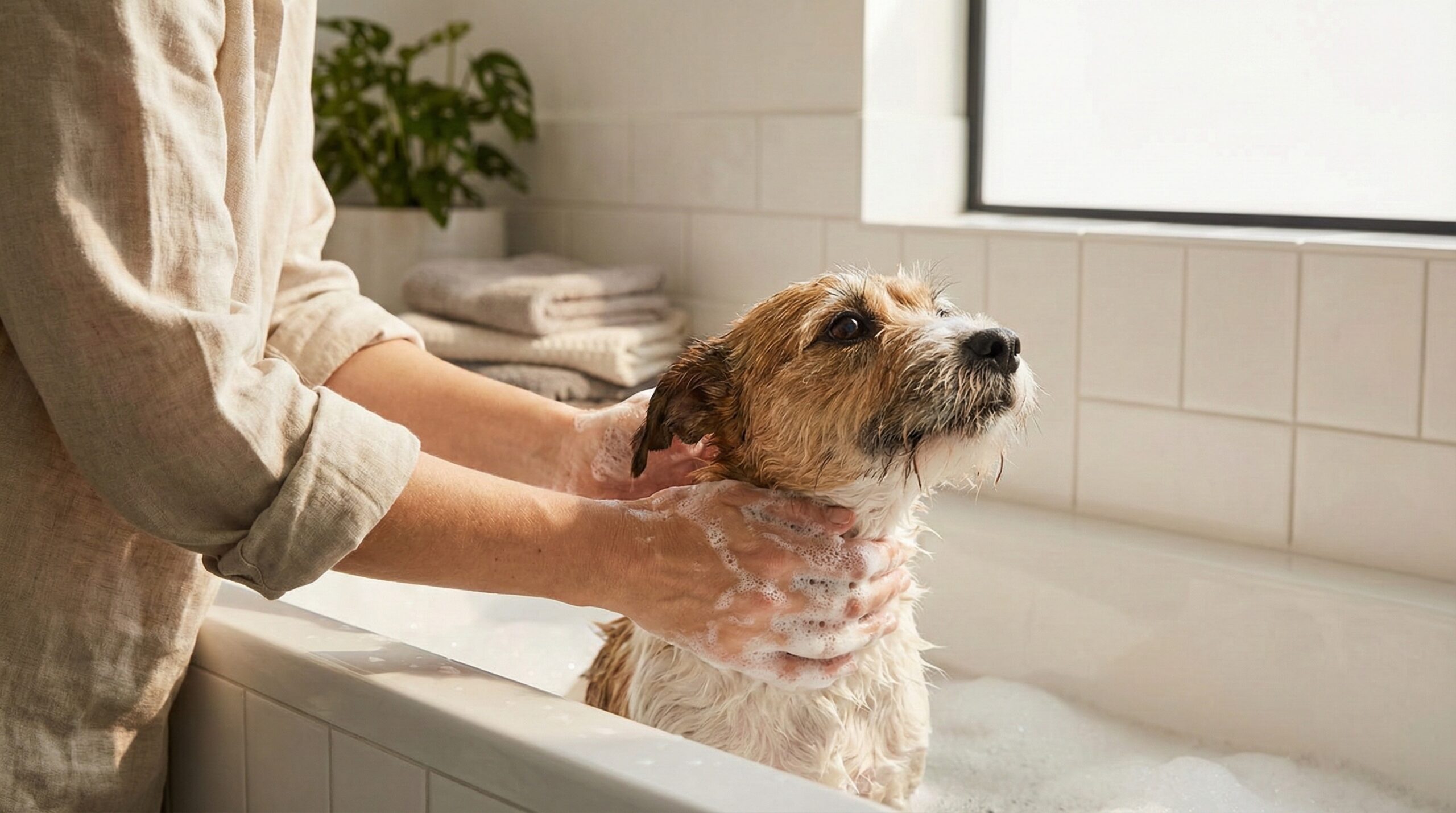
If you want to stop the shedding, the magic happens in the bathtub. I always tell my clients that you shouldn’t just “wash” the dog; you should “process” the coat. Use a rubber curry brush like the KONG ZoomGroom while the shampoo is still on the dog. Massage in circular motions to loosen the dead undercoat from the skin.
For the best results, use a high-quality conditioner. Conditioner acts as a lubricant, allowing the dead hair to slip out of the healthy coat instead of getting caught. This is especially important for dogs with sensitive skin, as it prevents the hair from pulling. Let the conditioner sit for five minutes, then rinse thoroughly. If you follow this up with a velocity dryer, you will see a “fur storm” that effectively clears out weeks of potential shedding in one go.
Best Deshedding Tools by Segment
Best for German Shepherds
The combination of an Andis Deshedding Tool and a Flying Pig Velocity Dryer is the gold standard for GSDs. These dogs have so much undercoat that a manual brush alone will never keep up. The rake handles the bulk, and the dryer handles the fine undercoat “dust.”
Best for Double-Coated Dogs (Huskies, Malamutes)
For these “blow out” breeds, the FURminator Grooming Rake (the one with rotating pins) is superior to the original bladed version. It prevents the coat from becoming frizzy and helps you navigate the dense fluff without snagging. Pair it with a finishing comb to check for mats in the “trouble spots” like the tail and hindquarters.
Best for Short-Haired Heavy Shedders (Labs, Pugs)
The EquiGroomer is the undisputed king here. Because these dogs have short guard hairs, traditional rakes don’t have much to grab onto. The EquiGroomer’s surface-level serrations are perfect for lifting that stubborn, prickly hair that gets stuck in your upholstery. If you’re managing health alongside grooming, our guide on pet health and care offers tips on how diet can also influence shed volume.
Frequently Asked Questions
Does the Furminator actually cut the dog’s hair?
Technically, the original Furminator tool has a blade that can cut the hair if used incorrectly. It is designed to pull out dead undercoat, but because the teeth are sharp and close together, it can act like a thinning shear on the top coat. To avoid this, use very light pressure and never go over the same spot more than twice in one session. For a safer alternative, many owners choose the FURminator Grooming Rake which uses pins instead of a blade.
What is the best alternative to the Furminator for sensitive skin?
The EquiGroomer is the best alternative for sensitive skin. Unlike tools that use long metal teeth to dive deep into the fur, the EquiGroomer stays on the surface and only grabs dead, brittle hair. It feels like a gentle scraping sensation rather than a pull. You might also consider tools specifically designed for dogs with allergies if your pet’s skin is particularly reactive.
How often should you use an undercoat rake on a double-coated dog?
During the “shedding season” (usually spring and fall), you should use an undercoat rake 2-3 times per week. For the rest of the year, once a week is usually enough to keep the undercoat from matting. Using a rake like the Andis Deshedding Tool too frequently can strip too much hair, so always monitor the thickness of the coat. If you start to see skin, you are over-grooming.
Can a velocity dryer replace brushing for heavy shedders?
While a Flying Pig Velocity Dryer can do about 80% of the work, it cannot completely replace brushing. The dryer is incredible at removing loose hair after a bath, but you still need a rake or comb to detangle and remove hair that is “stuck” but not yet loose. Think of the dryer as the heavy-lifter and the brush as the finishing tool. Using them together is the most efficient way to manage a heavy shedder.
Is the EquiGroomer safe for long-haired dogs?
The EquiGroomer is safe for long-haired dogs, but it is not very effective on them. Because the serrations are so short, they cannot reach through long guard hairs to get to the undercoat of a dog like a Golden Retriever or a Collie. It is much better suited for short to medium-length coats. For long-haired breeds, a Chris Christensen Stainless Steel Comb or a dedicated undercoat rake is a far more productive choice.
Maintenance Tips: How Often Should You Deshed?
Deshedding isn’t a one-and-done task. For heavy shedders, I recommend a tiered approach. Use a slicker brush daily for 5 minutes to catch surface hair before it hits your carpet. Once a week, spend 15-20 minutes with a dedicated undercoat rake. Finally, aim for a full “deshed bath” and blow-dry every 4 to 6 weeks.
Over-grooming can be just as problematic as under-grooming. If you notice your dog’s skin becoming pink, or if the coat starts to look thin or patchy, give it a rest for a week. Remember that your dog’s coat is their primary protection against the sun and heat; you want to remove the dead hair, not the living protection. By using the right combination of high-velocity dryers, rakes, and combs, you can turn a house full of fur into a manageable home where you can actually see your floors again.
Disclosure: We earn a small commission on qualifying purchases through our Amazon links, at no extra cost to you.
Affiliate disclosure: Some of the links in this article are affiliate links, meaning we earn a small commission if you make a purchase.